
If you haven’t exercised in a while, or you’re just starting out and want a manageable, progressively challenging routine, this 6-week beginner gym program is a solid starting point. It builds gradually from short, gentle sessions toward longer, more structured workouts, so you can establish a consistent habit without risking burnout or injury.
Before You Start
- Check with a doctor if you have an existing health condition, a previous injury, or haven’t exercised in a long time.
- Gather basic equipment: light dumbbells, a stability ball, a resistance (elastic) band, an exercise mat, and a step platform or sturdy chair for home workouts.
- Track your progress — a simple log of workouts, how you felt, and any measurements you care about (weight, reps, walking distance) helps you see how far you’ve come.
Gauging Your Workout Intensity
Throughout this program, intensity is described using the Rate of Perceived Exertion (RPE) scale, where 1 is minimal effort and 10 is maximum effort. Most beginner sessions target an RPE of about 5-6 — noticeable effort with some fatigue, but not complete exhaustion. A simple way to check this in real time is the “talk test”: at a moderate intensity, you should be able to talk in short sentences but not comfortably sing.
Week 1: Getting Started
The focus this week is simply becoming familiar with the program and learning to gauge your own intensity using the methods above.
Day 1 — Cardio, Strength, and Stretching (35-45 minutes): 20 minutes of beginner-level cardio, 10-15 minutes of fundamental strength exercises (light dumbbells, stability ball, chair, and mat), followed by gentle full-body stretching.
Day 2 — Walking and Stretching: A brisk 10-minute walk, followed by a few minutes of shoulder, neck, and back stretches.
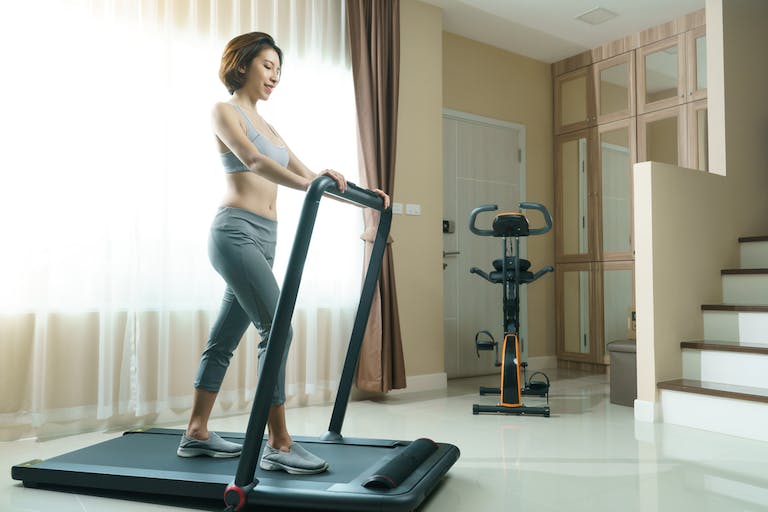
Day 3 — Cardio, Strength, and Stretching: Same structure as Day 1, but swap the cardio for a 10-minute cycling session or a 13-minute walk. Extend the cardio portion if you’re feeling up to it.
Day 4 — Active Rest: Support recovery with light movement rather than a full workout — a short walk, using the stairs a few extra times, or simply extending an earlier walk by 5 minutes.
Day 5 — Walking and Stretching: A brisk 10-minute walk, followed by 5-10 minutes of seated stretches.
Day 6 — Cardio, Strength, and Stretching: 20 minutes of basic cardio, 10-15 minutes of strength exercises with light weights, and a stretching cool-down.
Week 2: Applying the FITT Principle
Week 2 introduces small, deliberate progressions using the FITT principle — Frequency, Intensity, Time, and Type — a standard framework in exercise science for structuring a workout plan.
- Frequency: 3 cardio sessions and 3 strength sessions this week.
- Intensity: Continue targeting an RPE of about 5-6; introduce light interval training as it feels manageable.
- Time: Sessions gradually extend from 10-20 minutes toward longer durations in later weeks.
- Type: Choose activities you actually enjoy, and vary them to stay engaged and keep challenging different muscle groups.
Day 1 — Cardio, Strength, and Stretching: 25 minutes of cardio (5 more than last week), 2 sets of each strength exercise with rest between sets (10-20 minutes total), and stretching.
Day 2 — Walking and Stretching: A 15-minute brisk walk, followed by seated back, neck, and shoulder stretches.
Day 3 — Cardio, Strength, and Stretching: 21 minutes of basic interval training (using machines or any activity you enjoy), followed by strength exercises and a stretching cool-down.
Day 4 — Active Rest: Stay lightly active — sit-ups or push-ups while watching TV, a few minutes of stretching before bed, or an extended dog walk.
Day 5 — Walking and Stretching: 15-minute brisk walk with seated back, neck, and shoulder stretches.
Day 6 — Cardio, Strength, and Stretching: 25 minutes of cardio, 2 sets of each strength exercise (10-20 minutes total), and a stretching cool-down.
Week 3: Building Momentum
This week separates cardio and strength into dedicated days — 3 days of cardio and 2 days of strength training — so you can put more focused effort into each session.
Tracking Progress That Actually Matters
- Overall health: Notice non-scale wins like climbing stairs without getting winded or keeping up with kids or grandkids more easily.
- Strength and endurance: Logging sets, reps, and weights week to week shows tangible progress, even before other changes are visible.
- Weight and body composition: These change gradually — weigh-ins, body measurements, or how clothing fits are more useful than day-to-day fluctuations.
- Process over outcome: Setting specific session goals (finishing a set, adding a rep) keeps motivation grounded in what you control.
Day 1 — Cardio and Stretching: 30 minutes of cardio, followed by resistance-band stretching.
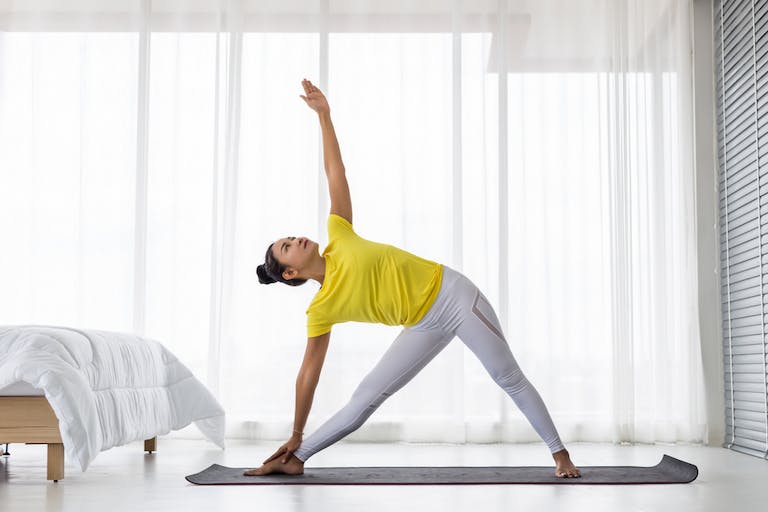
Day 2 — Strength Training and Yoga: A full-body strength circuit using dumbbells, a barbell, a step platform, a stability ball, or a resistance band — 2 sets of 15 reps per exercise (30-45 minutes total) — followed by 10 minutes of yoga.
Day 3 — Active Rest: Walk around the house, take a couple of laps around the parking lot before work, extend a pet’s walk, or aim for roughly 5,000 steps for the day.
Day 4 — Cardio and Stretching: 25 minutes of interval cardio at a slightly higher intensity than earlier weeks, followed by resistance-band stretching.
Day 5 — Full-Body Workout: Same full-body strength circuit as Day 2 (30-45 minutes, 2 sets per exercise).
Day 6 — Cardio and Stretching: 30 minutes of cardio with resistance-band stretching.
Week 4: Consolidate and Recharge
Intensity holds steady with last week to give your body — and your motivation — a chance to catch up before the program’s more demanding final weeks. Use this week to refine your form and build a routine that genuinely fits your schedule.
Staying motivated: Consider small rewards tied to hitting your goals this week — plans with friends or family, a relaxing massage, or simply time for a hobby you enjoy.
Day 1 — Cardio and Stretching: 30 minutes of cardio with resistance-band stretching.
Day 2 — Full-Body Workout: Full-body circuit with dumbbells, a barbell, a step platform, a stability ball, and a resistance band — 2 sets of 15 reps per exercise (30-45 minutes).
Day 3 — Active Rest: Light movement games with family, using a stability ball while watching TV or working at a desk, or a leisurely 20-minute walk.
Day 4 — Interval Cardio and Stretching: Interval cardio session, followed by resistance-band stretching.
Day 5 — Full-Body Workout: Repeat the Day 2 full-body circuit.
Day 6 — Interval Cardio and Stretching: Interval cardio session, followed by resistance-band stretching.
Week 5: Building Toward Peak Intensity
Training moves to 6 days a week this week, with new exercises and a modest jump in intensity. This is also a good week to make stress relief part of your routine, since exercise itself is an effective stress reliever — but watch for signs of overtraining, like persistent exhaustion rather than the usual post-workout energy lift, and scale back if needed.
Day 1 — Cardio and Stretching: 40 minutes of cardio, followed by simple stretching.

Day 2 — Full-Body Superset and Yoga: A more demanding 40-60 minute full-body superset session (barbell, varied dumbbells, step platform, stability ball), followed by yoga in the morning and evening.
Day 3 — Active Rest: Light walking or stretching to stay loose without a structured workout.
Day 4 — Interval Cardio and Stretching: 30 minutes of interval cardio, including hills or sprint intervals, at a higher intensity (roughly RPE 7-8), followed by seated stretching.
Day 5 — Full-Body Superset: Repeat the Day 2 full-body superset session.
Day 6 — Cardio and Stretching: Endurance-focused cardio at a moderately higher intensity than Week 1, followed by resistance-band stretching.
Day 7 — Bonus Cardio: An additional cardio session this week — any activity, at a steady moderate pace, for at least 20 minutes.
Week 6: Finishing Strong
The final week holds intensity steady with Week 5 rather than pushing further, giving your body a chance to consolidate the gains from a demanding week before you decide on next steps. You can repeat Week 5’s structure as-is, or make small adjustments — swapping in new cardio activities or slightly adjusting weights — to keep things engaging as you finish the program.
Day 1 — Cardio and Stretching: 40 minutes on a treadmill or exercise bike, followed by simple stretching.

Day 2 — Full-Body Superset and Yoga: Repeat the 40-60 minute full-body superset session from Week 5, followed by morning and evening yoga.
Day 3 — Active Rest: No structured workout — stay lightly active with walking or stretching.
Day 4 — Interval Cardio and Stretching: 30 minutes of interval cardio, followed by seated stretching.
Day 5 — Full-Body Superset: Repeat the Week 5 full-body superset session.
Day 6 — Endurance Cardio and Stretching: 35 minutes of endurance-focused cardio, followed by resistance-band stretching.
Day 7 — Bonus Cardio: Repeat last week’s bonus cardio session, or try a new activity at a steady, moderate pace for at least 20 minutes.
What Comes Next
Completing this program builds a solid foundation: a consistent habit, improved endurance, and comfort with basic strength training form. From here, most people either repeat the program at a higher intensity, move to a structured intermediate program, or work with a trainer to set new goals. If you’re also curious about exercise and its relationship to specific goals like height during growth years, see our related piece on whether Tabata exercise helps increase height.
The Bottom Line
A 6-week beginner gym program works best when it’s gradual: short, manageable sessions in the early weeks build the habit, while later weeks add duration, new exercises, and modest intensity increases. Track your intensity with simple tools like the talk test or an RPE scale, prioritize rest and active recovery days, and check in with a doctor first if you have any health concerns.
Frequently Asked Questions
Is a 6-week beginner gym program enough to see results?
Six weeks is enough time to build a consistent habit, improve endurance, and get comfortable with basic strength training form. Visible changes in body composition typically take longer, but improvements in energy, stamina, and strength are common within the first few weeks.
How do I know if I’m exercising at the right intensity?
Two simple methods are the talk test (during moderate exercise, you should be able to talk but not sing) and the Rate of Perceived Exertion (RPE) scale, where you rate your effort from 1 (very light) to 10 (maximum effort). Most beginner sessions should fall around 5-6 on the RPE scale, moving toward 7-8 as fitness improves.
What equipment do I need for this program?
Basic equipment includes a set of light dumbbells, a stability (exercise) ball, a resistance/elastic band, an exercise mat, and access to a step platform or sturdy chair. A treadmill, stationary bike, or simply outdoor walking space covers the cardio component.
Should I see a doctor before starting a new exercise program?
Yes, especially if you have an existing health condition, a previous injury, are pregnant, or haven't exercised in a long time. A doctor can advise on any modifications needed for your specific situation.
What if I feel exhausted instead of energized after workouts?
Persistent exhaustion, rather than the expected post-workout energy boost, can be a sign of overtraining. Scale back intensity or duration, prioritize rest days, and make sure you're eating and sleeping enough to support recovery.
References
- American College of Sports Medicine (ACSM) — FITT principle and exercise prescription guidelines for beginners.
- Centers for Disease Control and Prevention (CDC) — Physical Activity Guidelines for Americans.
- Borg Rating of Perceived Exertion (RPE) scale — standard method for gauging subjective exercise intensity.
- American Heart Association — the “talk test” as a practical intensity gauge during aerobic exercise.
This is really interesting, You’re a very skilled blogger. I’ve joined your feed and look forward to seeking more of your magnificent post. Also, I’ve shared your site in my social networks!
Nice post. I learn something totally new and challenging on websites
Nice post. I learn something totally new and challenging on websites
I very delighted to find this internet site on bing, just what I was searching for as well saved to fav
Nice post. I learn something totally new and challenging on websites
I very delighted to find this internet site on bing, just what I was searching for as well saved to fav
naturally like your web site however you need to take a look at the spelling on several of your posts. A number of them are rife with spelling problems and I find it very bothersome to tell the truth on the other hand I will surely come again again.
I like the efforts you have put in this, regards for all the great content.
For the reason that the admin of this site is working, no uncertainty very quickly it will be renowned, due to its quality contents.