

Instead of soccer, volleyball, swimming, or other traditional workouts, many people are turning to Tabata for their daily exercise. It’s efficient, intense, and genuinely improves fitness — but does it actually help you grow taller, as some claim? Here’s an honest, evidence-based answer.
What Is Tabata Exercise?
Tabata is a style of high-intensity interval training (HIIT), developed by Dr. Izumi Tabata at Japan’s National Institute of Fitness and Sports while researching training methods for Olympic speed skaters.
A classic Tabata round consists of 8 intervals: 20 seconds of maximum-effort exercise followed by 10 seconds of rest, for a total of 4 minutes. It’s designed to be done at true, near-maximal intensity — which is exactly what makes it exhausting in such a short time.
Tabata is genuinely effective for burning calories relative to its short duration. Research measuring a 4-minute Tabata circuit found participants burned roughly 13.5–15 calories per minute — around 55–60 calories total for the 4-minute workout — and their metabolic rate stayed elevated for a while afterward due to excess post-exercise oxygen consumption (EPOC), the “afterburn” effect. That’s an impressive rate of calorie burn for such a short session, but it’s worth being precise: a full 4-minute Tabata session burns meaningfully less than a full hour of continuous cycling, running, or brisk walking, simply because those activities last so much longer. Tabata’s real advantage is efficiency per minute, not a higher total calorie burn than a full hour of steady exercise.
Does Tabata Exercise Actually Increase Height?
Here’s the honest answer: no exercise, Tabata included, increases height beyond what your genetics and growth plates allow. Height is primarily determined by genetics, with nutrition, sleep, and overall health during childhood and adolescence determining how close you get to your full genetic potential. Once the growth plates (areas of cartilage near the ends of long bones) fuse — typically by the late teens to early twenties — no amount of exercise, stretching, or any other intervention will lengthen your bones or make you taller.
What Tabata can do is support bone and muscle health more broadly. Weight-bearing, high-impact movements — jumping, planks, squats, and similar exercises — place mechanical stress on bones that helps stimulate bone mineral density over time, which is genuinely valuable for skeletal health at any age. It’s true that intense exercise like Tabata triggers a short-term spike in growth hormone release. However, this acute hormonal response does not translate into increased bone length in adults whose growth plates have already closed, and its actual contribution to final adult height even during the growing years is modest at best compared to genetics, nutrition, and adequate sleep.
For children and teenagers who are still growing, staying active — Tabata or otherwise — alongside good nutrition and sufficient sleep supports healthy development and helps the body reach its genetically determined height potential. But this is different from claiming any specific workout adds inches beyond that potential. If you enjoy Tabata, it’s a great addition to an active lifestyle for its fitness and bone-health benefits — just not as a height-increasing strategy, whether you’re still growing or already an adult. (For more on this topic, see our related look at whether jogging can increase height.)
How Much Does Height Typically Grow at Different Life Stages?
Growth velocity — how much a person’s height typically increases per year — varies by developmental stage, but this is a matter of normal biology, not something any particular workout produces:
- During puberty, height commonly increases by roughly 2.8 to 3.9 inches per year, driven by the pubertal growth spurt.
- Before puberty, typical growth is roughly 2 to 2.8 inches per year.
- After puberty, once growth plates are closing or closed, height typically increases by 0.8 to 2 inches at most in the final growth phase, or not at all.
These ranges reflect normal biological growth patterns across a population — they aren’t a result of any specific exercise program, including Tabata, and no amount of training changes which stage someone is in.
8 Effective Tabata Exercises
Tabata exercises are simple in concept but demanding in execution — the key is maintaining a fast, consistent pace. Here are 8 exercises commonly used in a Tabata routine.
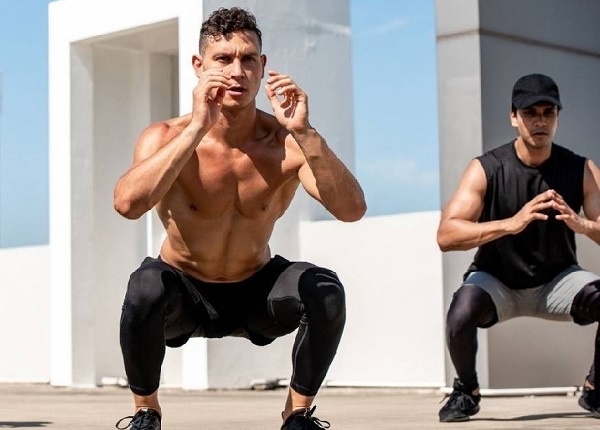
Squats
- Stand straight with feet shoulder-width apart, toes slightly pointing outward.
- Slightly bend the arms so that the palms are clasped in front of the chest.
- Slowly lower the hips down until in a squatting position.
- Adjust the elbows to touch the inner side of the knees.
- Maintain the position for about 20 seconds, then stand up and repeat the movement.
Plank to Push-Up
- Lie face down with legs straight, close together, toes touching the ground, and palms flat on the floor.
- Slowly raise the body up while adjusting the two elbows to make contact with the floor.
- Keep the back, legs, and head in a straight line (plank position), hold for 5–10 seconds.
- From the plank position, straighten both arms to raise the body up high, forming a push-up position.
- Hold for 5–10 seconds, then lower the body back to the plank position and continue to repeat.

Hip Thrusts
- Stand upright with feet shoulder-width apart and both hands clenched.
- Move to the left 1–2 steps and then kick the foot backward, with the hands swinging freely.
- Move to the right 1–2 steps and then kick the foot backward, with the hands swinging freely.
- Repeat continuously, quickly and decisively.
- Exercise for about 20 seconds, then switch to another exercise.

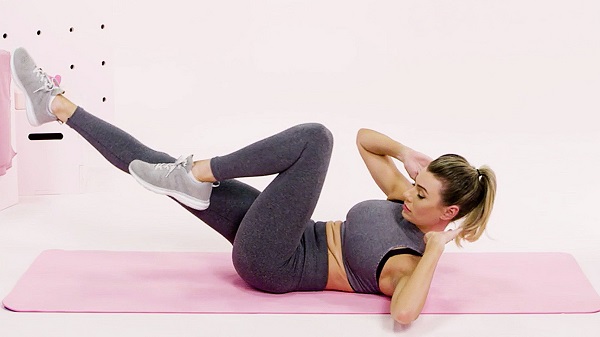
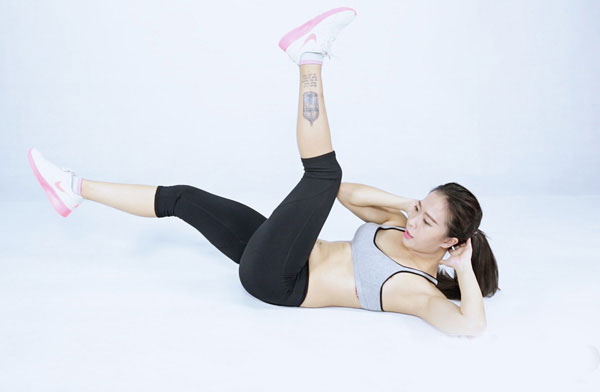
Bicycle Crunches
- Lie on your back on the floor with both legs straight and both hands crossed behind the head.
- Bend the right leg up, keeping the left leg straight, and tilt the upper body to the right.
- Straighten the right leg and bring up the left leg, tilting the upper body to the left.
- Perform continuously for 20 seconds.
Lunges
- Stand upright with feet shoulder-width apart.
- Extend both arms straight in front of the chest, while lunging with the right leg, extending the left leg and leaning the body to the right.
- Extend the right leg, while lunging with the left leg and leaning the body to the left.
- Perform this exercise sequence continuously for 20 seconds.
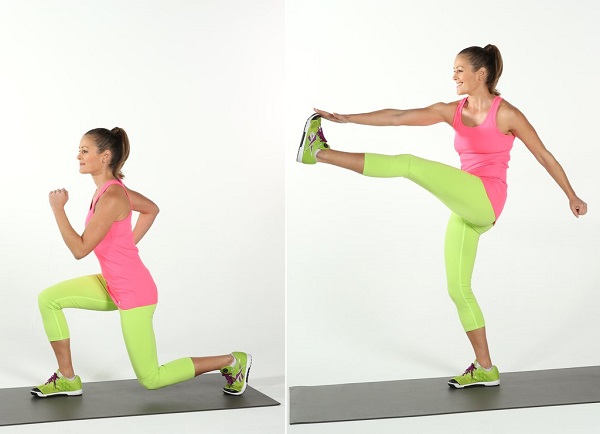
Leg Scissors
- Stand upright with both legs straight, with the heels lightly touching and both arms extended.
- Kick the left leg straight forward, while bringing the right hand to touch the left shin.
- Continue to kick the right leg forward, while bringing the left hand to touch the right shin.
- Alternate kicking both legs continuously for 20 seconds.
- It’s not necessary to touch the shins — you can touch your thighs instead. Just keep both your arms and legs fully extended.
Full Body Stretch
- Stand upright with both arms raised high above the head, palms touching each other.
- Kick the left leg back, bring it in, and continue to kick the right leg.
- Perform the exercise continuously for 20 seconds.
Russian Twists
- Sit on the floor with both legs bent and both hands clasped in front of you.
- Lean back slightly, lifting both legs up.
- Twist to the left, bringing both hands to the left.
- Twist to the right, bringing both hands to the right.
- Perform continuously for 20 seconds.

Tips for a Safe, Effective Tabata Routine
- Perform each exercise at the fastest safe pace for the full 20 seconds.
- Rest for only 10 seconds between exercises, then move immediately to the next one.
- Warm up before starting to reduce injury risk.
- Cool down with gentle stretching afterward rather than sitting down immediately.
- If you’re new to Tabata or HIIT generally, start at a lower intensity and build up gradually — true Tabata intensity is demanding and isn’t the right starting point for beginners.
- Eat a light meal beforehand and take small sips of water during the workout.
- If you experience unusual muscle soreness or stiffness, rest for a day or two before your next session.
- If you have a history of heart disease, joint problems, high blood pressure, or any other condition that could make high-intensity exercise risky, talk with your doctor before starting Tabata.
- Everyone’s energy and comfort level during menstruation is different — some people prefer lighter activity or rest during this time, while others feel fine continuing their normal routine. Listen to your body.
Beyond exercise, reaching your full height potential during the growing years depends heavily on adequate calcium and overall nutrition, along with sufficient sleep, since growth hormone release peaks during deep sleep.
Tabata may not be a height-increasing shortcut, but it’s still a genuinely effective, time-efficient workout. Strong, fit muscles and good posture can also make a real difference in how tall you appear day to day. If you’re building out a broader HIIT or cardio routine, you might also enjoy our guide to stair running for speed and strength.
Frequently Asked Questions
Does Tabata really increase height?
No — no exercise, including Tabata, increases height beyond what genetics and open growth plates allow. Tabata can support bone density and overall fitness, which is valuable at any age, but it won't add height beyond your genetic potential, and it has no effect on height once growth plates have closed in adulthood.
How many calories does a 4-minute Tabata workout actually burn?
Research suggests roughly 13.5–15 calories per minute, or about 55–60 calories for a full 4-minute session, with metabolism staying elevated for a period afterward. That's efficient for 4 minutes, but it's still less than a full hour of continuous moderate exercise like cycling or running.
Is Tabata safe for beginners?
True Tabata is meant to be performed at near-maximal intensity, which can be too demanding for exercise beginners. It's generally better to build a fitness base with lower-intensity interval training first, then work up to full-intensity Tabata.
Who should avoid or modify Tabata workouts?
People with a history of heart disease, joint problems, high blood pressure, or other conditions that make high-intensity exercise risky should talk with a doctor before starting Tabata.
References
- Olson, M. (2013) — Auburn University Montgomery study on Tabata calorie expenditure, presented at the American College of Sports Medicine annual conference.
- Tabata, I. et al. — Original research on high-intensity intermittent training and VO2max/anaerobic capacity, Medicine & Science in Sports & Exercise.
- General pediatric and endocrinology consensus on growth plate closure and determinants of adult height (genetics, nutrition, sleep).