
Every parent wants their child to feel confident, strong, and healthy. And if you’ve ever wondered whether there’s something more you could do to support your child’s growth — you’re not alone.
Here’s something reassuring to know upfront: genetics do play a big role in height, accounting for roughly 60 to 80 percent of how tall your child will ultimately grow. But that still leaves 20 to 40 percent influenced by things you actually have some control over — nutrition, sleep, daily habits, and overall lifestyle.
The years between 2 and 12 are often called the “golden window” of childhood growth. This is when the body is developing rapidly, building the bone density and hormonal foundation that will carry your child through puberty and beyond. What happens during these years matters.
In this article, you’ll discover 5 practical, science-backed ways to naturally support your child’s height growth — without pressure, without unrealistic promises, and without complicated routines. Just real strategies that real families can use every day.
How Height Growth Actually Works
Before diving into the strategies, it helps to understand what’s going on inside your child’s body during these years.
Height growth is driven by growth plates — thin layers of cartilage near the ends of long bones that gradually harden into solid bone as your child matures. As long as these plates are still open, growth is possible. They typically remain active throughout childhood and into the teenage years, which is exactly why the 2–12 window is so significant.
Human Growth Hormone (HGH) is the key driver of this process. It’s produced naturally by the pituitary gland — and it peaks during deep sleep and physical activity, which is why both of those factors show up in this list.
There are two especially active growth periods to know about: early childhood (ages 2–5) and pre-puberty (ages 8–12). During these phases, the body is particularly responsive to nutritional support and healthy habits.
One more thing worth saying clearly: every child grows at their own pace. Height variation is completely normal, and the goal here isn’t to chase a number on a growth chart — it’s to give your child the healthiest possible foundation.
5 Natural Ways to Support Your Child’s Height Growth
Prioritize Quality Sleep Every Night
If there’s one thing on this list that deserves the most attention, it’s sleep — and the science is clear on why.
Growth hormone is released in its highest concentrations during deep, slow-wave sleep. When your child sleeps well and consistently, their body has the opportunity to do its most important growth work.
When sleep is cut short or disrupted, that window shrinks.
Recommended sleep by age:
- Ages 2–5: 10–13 hours per night
- Ages 6–12: 9–12 hours per night
Practical tips for a better bedtime routine:
- Set a consistent bedtime — even on weekends
- Dim lights and reduce screen time at least one hour before bed
- Keep the bedroom cool, quiet, and dark
- Wind down with calm activities like reading or gentle stretching
- Avoid sugary snacks close to bedtime
It sounds simple because it is. But consistent, quality sleep is one of the most powerful — and most underutilized — tools for supporting natural growth in children.
Encourage Active Play and the Right Kind of Exercise
Kids were built to move. And movement does a lot more than burn energy — it actively stimulates bone growth and triggers the release of growth hormone.
The best activities for growth support:
- Swimming — full-body movement that stretches and strengthens
- Basketball and jumping rope — vertical movement that encourages bone lengthening
- Cycling — builds lower body strength with low joint impact
- Yoga and stretching — improves posture and spinal alignment
- Running and outdoor play — weight-bearing activities that support bone density
Studies show that 60 minutes of moderate physical activity per day is the recommended standard for school-age children. It doesn’t need to be structured — free play, sports, and family activities all count.
One often-overlooked bonus of exercise: it also improves sleep quality. That means when your child is active during the day, they’re more likely to fall into the deep sleep cycles where growth hormone does its best work.
Build a Height-Supporting Diet
Food is the raw material your child’s body uses to grow. And while no single meal is going to add inches overnight, a consistently nutrient-rich diet during the 2–12 window makes a genuine, cumulative difference.
Key nutrients for height and bone growth:
| Nutrient | Why It Matters | Kid-Friendly Sources |
|---|---|---|
| Calcium | Core building block of bone | Milk, yogurt, cheese, broccoli |
| Vitamin D3 | Enables calcium absorption | Sunlight, fatty fish, fortified milk |
| Vitamin K2 | Directs calcium to bones | Eggs, fermented foods, leafy greens |
| Protein | Supports tissue and bone growth | Eggs, chicken, tofu, beans |
| Magnesium | Assists bone mineralization | Nuts, seeds, whole grains, bananas |
| Zinc | Supports cell division and growth | Meat, legumes, pumpkin seeds |
Common deficiencies in modern kids to watch for:
- Low Vitamin D — especially in children with limited outdoor time or sun exposure
- Insufficient calcium — common in picky eaters who avoid dairy
- Low protein intake — particularly in kids with selective eating habits
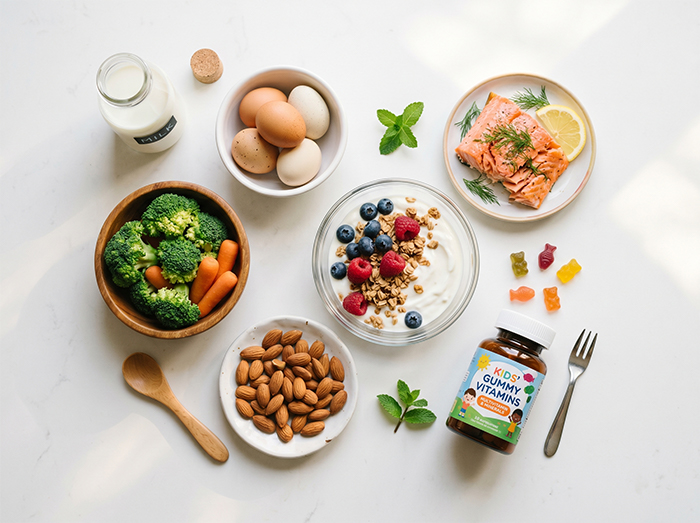
Fuel growth from the inside out — the foods your child eats today are building the bones they’ll stand on tomorrow.
The goal isn’t perfection at every meal. It’s building a consistent pattern over weeks and months where these nutrients show up regularly on your child’s plate.
Maintain a Positive Environment and Reduce Stress
This one doesn’t come up often in height growth conversations — but it should.
Chronic stress in children directly interferes with growth hormone production.
When the body is under prolonged stress, it redirects its resources toward managing that stress rather than growing. Studies have shown that children in high-stress environments — including those experiencing emotional neglect, family conflict, or persistent anxiety — can experience measurable delays in growth compared to their peers.
What you can do to support your child’s emotional environment:
- Create predictable daily routines — children thrive on structure and knowing what to expect
- Make time for connection — regular one-on-one time builds security
- Limit unnecessary pressure around performance, appearance, and comparison
- Encourage open conversations — let your child talk about worries without judgment
- Model calm — your emotional tone has more influence than you might realize
A child who feels safe, loved, and supported isn’t just happier. They’re physiologically better positioned to grow.
Consider Smart, High-Quality Supplementation When Needed
Here’s the honest truth: even with the best intentions, most kids don’t eat a perfectly balanced diet every single day. Picky eating, busy schedules, limited sun exposure, and seasonal food availability all create nutritional gaps — and during the critical growth years, those gaps can matter.
Signs that supplementation might be worth considering:
- Your child avoids dairy or other calcium-rich foods
- Limited time outdoors (affecting Vitamin D levels)
- A restricted diet due to allergies or food preferences
- Your pediatrician has flagged a nutritional concern
What to look for in a children’s growth supplement:
- Clean ingredients — no artificial dyes, fillers, or unnecessary additives
- Proper nutrient forms — Vitamin D3 (not D2), K2 as MK-7 for optimal bioavailability
- Format kids will actually take — gummies, chewables, or easy-to-swallow capsules
- Third-party testing or certification — so you know what’s on the label is actually in the bottle
- Age-appropriate dosing — formulated specifically for children, not scaled-down adult formulas
Many parents are turning to convenient options like NuBest Tall Gummies. These tasty, vegan gummies are IGEN™ Certified Non-GMO, sugar-free, and formulated with key bone-supporting nutrients including Vitamin D3, K2, Calcium, and Magnesium. Designed specifically for children ages 2 and up, they’ve become a popular choice for families looking for clean, easy, daily nutritional support — without the battle of getting kids to take a pill.
A Sample Daily Routine for Maximum Growth Support
Here’s what a growth-supportive day can look like in practice — simple enough to actually stick to:
☀️ Morning
- Consistent wake-up time (even weekends)
- Protein-rich breakfast: eggs, yogurt, or nut butter on whole grain toast
- 10–15 minutes of morning sunlight when possible
🍎 Midday
- Balanced lunch with calcium and protein
- Outdoor recess or active play for at least 30 minutes
🏃 Afternoon
- 30+ minutes of active movement — sports, free play, cycling
- Healthy snack: fruit, cheese, nuts, or a smoothie
📵 Evening
- Limit screen time 60 minutes before bed
- Light dinner with vegetables and protein
- Take any daily supplements with dinner
- Consistent bedtime routine: bath, reading, lights out
✅ Daily Checklist for Parents:
- 9–12 hours of sleep scheduled
- 60 minutes of physical activity
- Calcium and protein at every meal
- At least 15 minutes of outdoor sunlight
- Calm, low-stress bedtime routine
- Consistent supplement if using one
Important Things to Remember
Before you close this article, a few honest reminders worth keeping in mind:
No product, habit, or routine can guarantee extra inches. Height is influenced by genetics above everything else, and that’s okay. The goal of everything in this article is to support your child’s health — height is one potential outcome, not the only measure of success.
Consistency matters more than perfection. You don’t need a flawless routine every single day. Small, sustainable habits practiced consistently over months and years have far more impact than short-term intensive efforts.
Know when to talk to your pediatrician. If your child’s growth has slowed significantly, they’ve dropped percentiles on the growth chart, or you have concerns about their development, a pediatrician visit is always the right move. Some growth delays have underlying medical causes that supplements and lifestyle changes can’t address.
Growth is individual — focus on health first. A child who sleeps well, eats well, moves their body, and feels emotionally secure is thriving — regardless of where they fall on a height chart.
In conclusion,
Supporting your child’s growth doesn’t require a complicated plan or expensive interventions. It requires consistency in the fundamentals: quality sleep, daily movement, nutrient-rich food, emotional support, and smart supplementation when your family needs it.
The 5 strategies in this article aren’t shortcuts — they’re building blocks. And when you stack them together over the golden window of ages 2 to 12, you’re giving your child the best possible foundation for healthy development and lasting confidence.
Small, consistent changes really do make a big difference. And they’re absolutely within reach for every family.
If you’re looking for a clean supplement option to fill nutritional gaps, many parents explore NuBest Tall Gummies at NuBest.com — a simple, gummy-format option that kids actually enjoy taking.
REFERENCES
Frequently Asked Questions
The earlier, the better. The window between ages 2 and 12 is when nutrition, sleep, and daily habits have the greatest influence on your child's natural growth potential — so starting early gives you the longest runway.
Focus on calcium-rich foods like dairy, leafy greens, and fortified options, paired with protein sources like eggs and chicken, and Vitamin D from sunlight or fortified milk. Consistency across meals matters far more than any single "superfood."
No — and any brand that claims otherwise isn't being honest with you. Genetics account for 60–80% of height. What you can do is support the remaining 20–40% through smart daily habits, good nutrition, quality sleep, and the right supplementation when needed.
More than most parents realize. Growth hormone is released primarily during deep sleep, which means consistent, quality sleep isn't just good for behavior and focus — it's one of the most powerful natural growth tools available.
If your child is a picky eater, gets limited sun exposure, or has dietary restrictions that make consistent nutrition difficult, a clean, age-appropriate supplement can help fill those gaps. Always check with your pediatrician first.

Johnny Jacks was born in 1985 in Texas, USA. He is the founder of Good Health Plan and is passionate about helping people improve their health and physical well-being. With over a decade of experience working in the healthcare industry, he currently works at Goodheathplan.com – a blog that shares knowledge on beauty and health.