

Breaststroke looks simple from the pool deck, but self-taught swimmers often struggle with the finer points of technique. Here’s a clear, accurate guide to learning breaststroke on your own — along with the water safety basics worth knowing before you dive in.
Benefits of Breaststroke
Breaststroke is a genuinely great full-body workout. A 30-minute session can burn roughly 200 calories or more, depending on your effort level and body weight, while working your chest, hamstrings, thighs, core, and arms. It also supports cardiovascular fitness like other swimming strokes.
Breaststroke is often considered one of the more approachable strokes to start learning, since your head can stay above water more easily and the pace is naturally slower than strokes like freestyle or butterfly. That said, it has a reputation among swim coaches as one of the trickier strokes to truly master, since the timing between your arm pull, kick, and glide has to line up precisely — more on the common mistakes below. Its slower pace does make it well suited for longer, endurance-focused swim sessions once you’ve got the technique down.
Water Safety Basics Before You Start
Since this guide is about self-teaching a physical skill in the water, a few safety basics are worth mentioning upfront:
- Never swim alone: Practice with a buddy or in a supervised area with a lifeguard present, especially while you’re still working on technique.
- Start in water you can stand in: Practice new movements in shallow water first, where you can easily stop and stand if needed.
- Know your limits: Don’t push into deep water or long distances before you’re confident in your technique and stamina.
- Consider professional instruction alongside self-teaching: Reading about technique is a great starting point, but a certified swim instructor can watch your form in real time and catch issues that are hard to self-diagnose — especially for a technically demanding stroke like breaststroke. Even a few lessons can meaningfully speed up your progress and help you avoid reinforcing bad habits.
How to Self-Teach Breaststroke
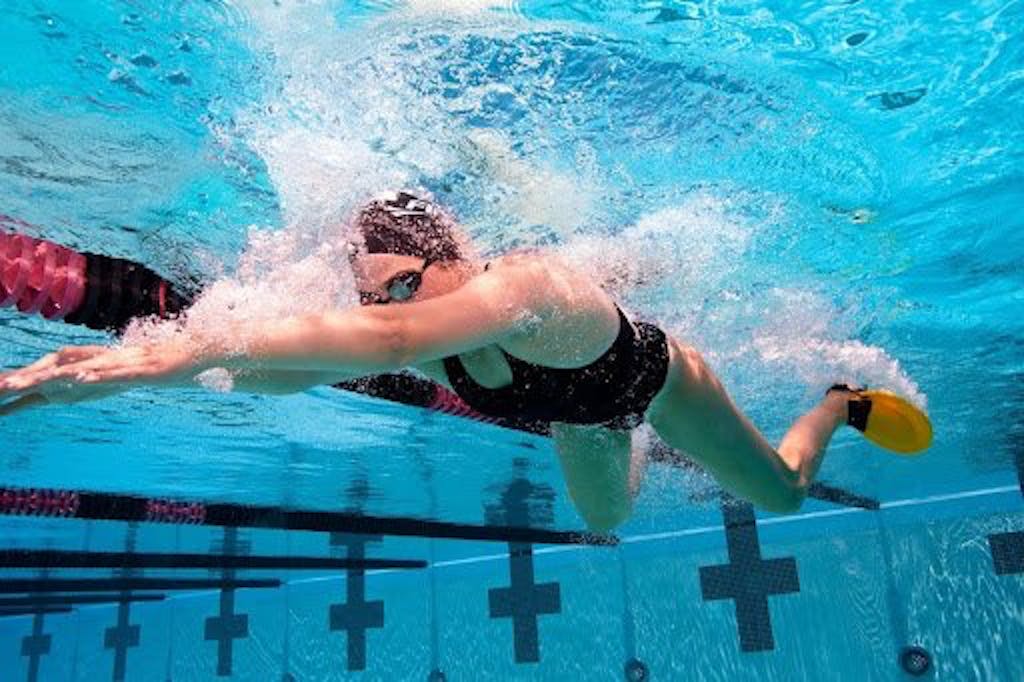
Here’s what to focus on as you build your technique:
Body Position
Keep your body in a horizontal, streamlined position in the water, with your shoulders, hips, and legs as level as possible, and a slight downward tilt to keep your feet submerged during the kick. Engage your core and legs to keep your hips from sinking. Keep your neck and shoulders relaxed, and look down at the water during the glide phase to avoid neck strain and keep your hips from dropping.
Arm Movement
From the glide position (arms extended forward), sweep your hands outward and slightly down, keeping your elbows high as you catch the water. Bring your hands back inward toward your chest in a smooth, rounded motion, then extend your arms forward again to reset. Avoid sweeping your arms too wide — most of your propulsion in breaststroke comes from the kick, not the arm pull, so a wide, forceful arm pull wastes energy without adding much forward speed.
Kick (Whip Kick)
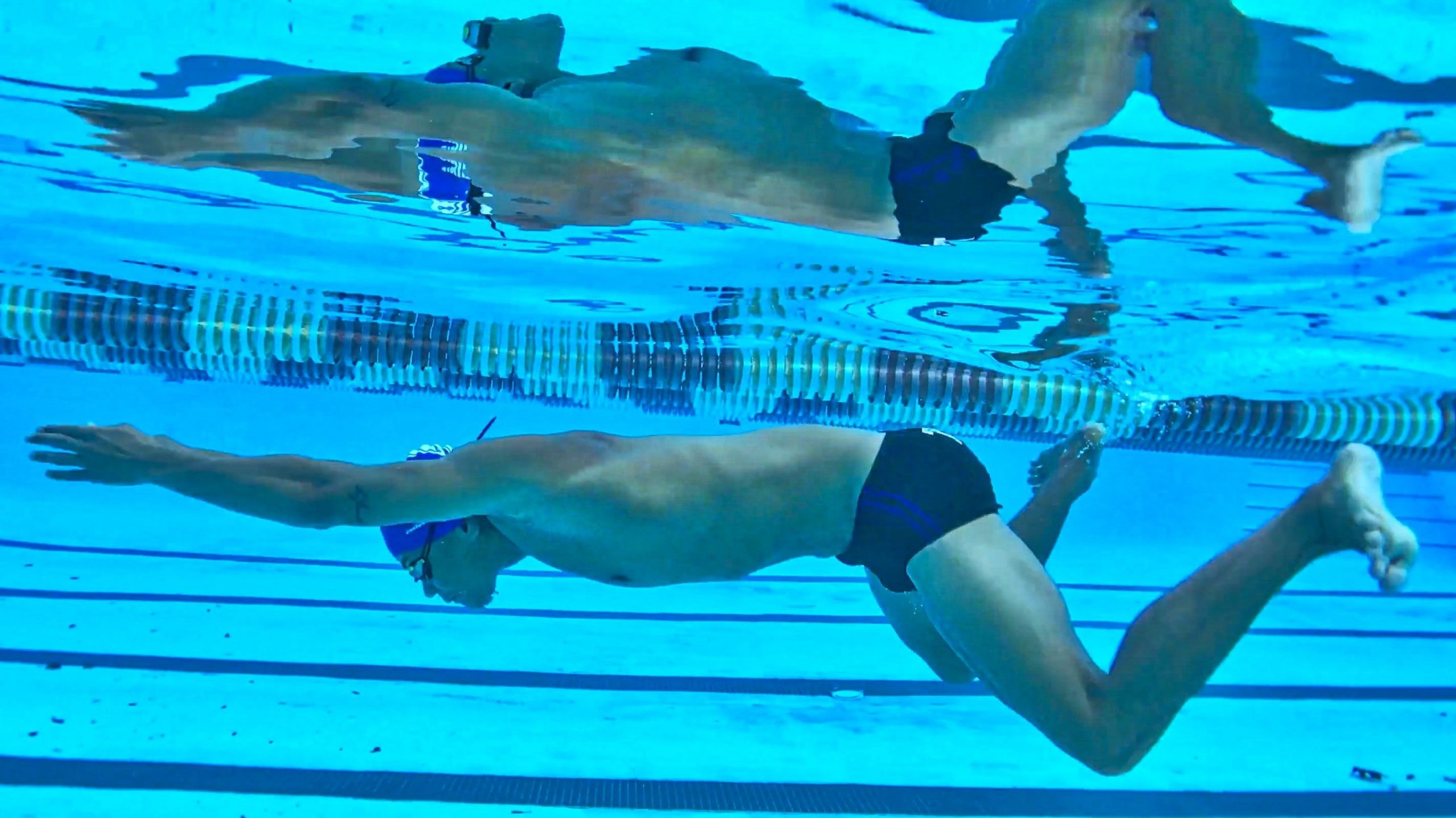
The kick generates most of your forward propulsion, so it deserves careful attention. Draw your heels up toward your body with your knees only slightly wider than your hips, then turn your feet outward and sweep them out and back in a circular motion, finishing with your legs extended straight and together. Keep your ankles flexible throughout — stiff ankles significantly reduce the kick’s power.
Breathing
Breathe by lifting your shoulders and chest to bring your mouth just above the water’s surface — not by craning your head upward, which strains your neck and disrupts your body position. Inhale through your mouth as your shoulders rise during the arm pull, then exhale underwater as you glide forward. A simple way to remember the sequence: pull, breathe, kick, glide.
Common Mistakes in Self-Taught Breaststroke
Breaststroke is genuinely one of the more technically demanding strokes, and these mistakes are common even among experienced swimmers, not just beginners.
Looking Too Far Forward
Lifting your head to look ahead instead of down during the glide tends to push your hips downward, working against the horizontal position you’re trying to maintain. Keeping your gaze down during the glide phase helps keep your body aligned and moving forward efficiently.
Letting Your Hips Drop
A body that’s angled upward in the water, rather than horizontal, means your kick and pull are pushing you up rather than forward. Staying as flat and streamlined as possible keeps your effort directed toward forward motion.
Kicking Too Wide
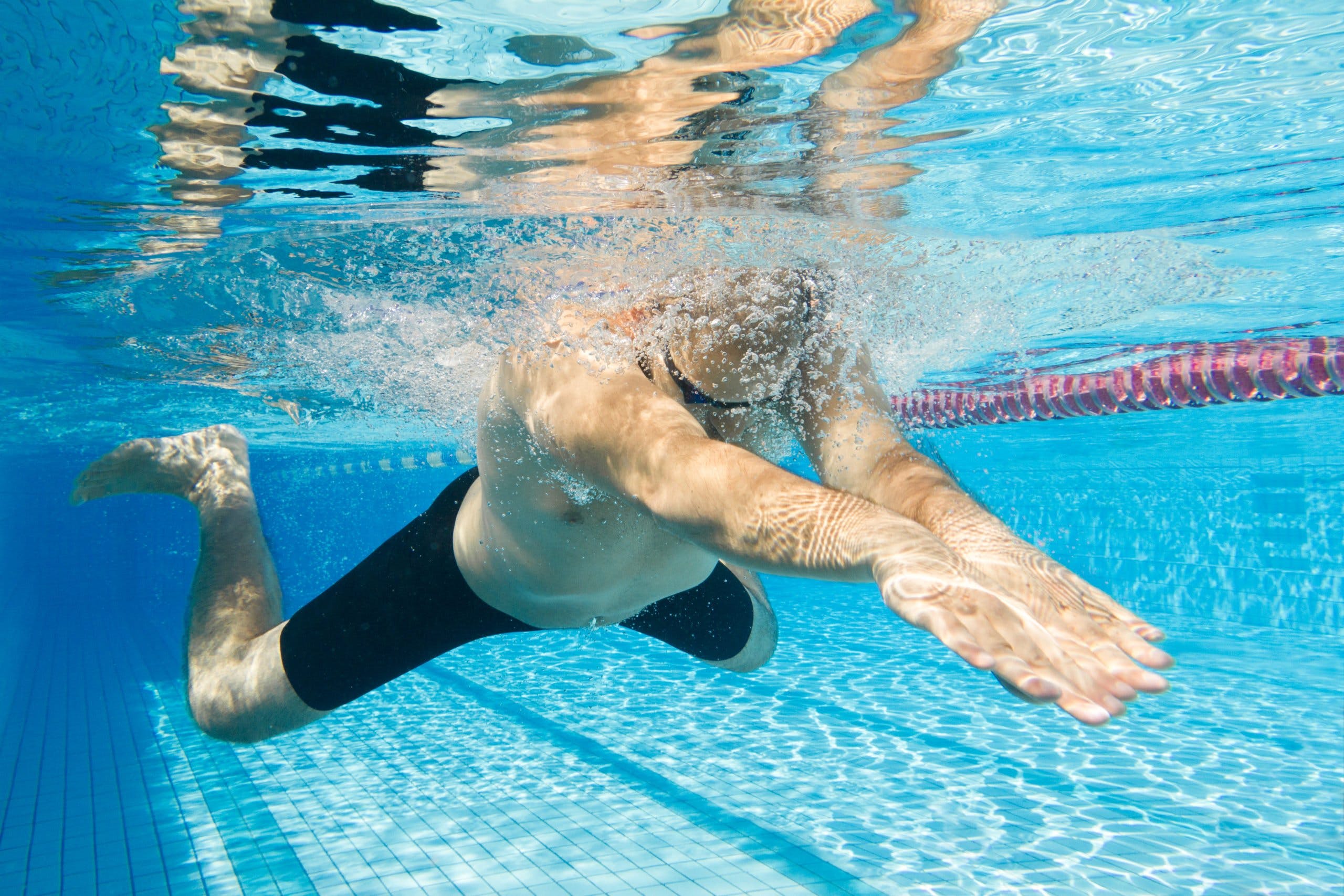
A kick that’s too wide, with knees splayed outward, reduces how efficiently your feet can push water backward. Keeping your knees closer together (just slightly wider than hip-width) and focusing on the whip-like snap of the kick improves propulsion.
Pulling Arms Too Wide
Similar to an overly wide kick, sweeping your arms too far out from your body means you’re pulling less water per stroke for more effort. A tighter, more controlled pull is more efficient.
Pulling and Kicking at the Same Time
A common habit among self-taught swimmers is pulling and kicking simultaneously, creating a circular motion that feels natural but doesn’t generate much forward momentum. Proper breaststroke timing follows a sequence — pull, then kick, then glide — rather than one continuous, blended motion.
Breaststroke rewards patience — the individual movements are approachable, but getting the timing right takes practice. Focus on one element (body position, arms, kick, or breathing) at a time rather than trying to perfect everything at once, and don’t hesitate to get feedback from a lifeguard, coach, or more experienced swimmer as you go. This article is intended for general education and isn’t a substitute for hands-on instruction, especially for a physical skill like swimming where safety is a real consideration.
Frequently Asked Questions
Is breaststroke really the easiest stroke to learn?
It's often considered one of the more approachable strokes to get started with, since it's easier to keep your head above water and the pace is slower. However, mastering its precise timing between the pull, kick, and glide is genuinely challenging, even for experienced swimmers.
How many calories does breaststroke burn?
Roughly 200 calories or more per 30 minutes for a typical adult, depending on effort level and body weight — a solid full-body workout that also supports cardiovascular fitness.
What’s the most common mistake in breaststroke?
Pulling and kicking at the same time is one of the most common errors among self-taught swimmers. Proper technique follows a sequence — pull, then kick, then glide — rather than blending the movements together.
Can I safely teach myself breaststroke without a coach?
You can learn a lot on your own, but a certified swim instructor can spot technique issues in real time that are hard to self-diagnose. Always practice in a supervised area or with a buddy, and consider at least a few professional lessons to build a safe foundation.
Why do my hips sink when I swim breaststroke?
This is usually caused by lifting your head too high to look forward, or not engaging your core and legs enough to keep your body horizontal. Keeping your gaze down during the glide and maintaining a streamlined body position helps keep your hips up.
References
- USA Swimming — breaststroke technique fundamentals (usaswimming.org).
- American Red Cross — water safety guidelines for swimmers (redcross.org).
- Mayo Clinic — swimming for fitness: health benefits and calorie burn (mayoclinic.org).
Lirigzon Gashi