

Adding dumbbell exercises to your routine is a simple, effective way to build strength in your arms and shoulders. Paired with full-body training, these targeted moves help tone and strengthen these areas specifically.
Dumbbell exercises are simple, beginner-friendly, and don’t require much equipment — just two moderate-weight dumbbells (or household substitutes like water bottles or cans if you’re just starting out). Here are four effective dumbbell exercises for your arms and shoulders.
Before You Start
A quick 5-minute warm-up (light cardio and arm circles) helps prepare your muscles and joints. Choose a weight you can lift with full control through the entire range of motion — if your form breaks down or you need to swing the weight to lift it, it’s too heavy. Move through each rep slowly and with control, especially on the way down, which is when a lot of the muscle-building work happens.
Exercise 1: Dumbbell Bicep Curl
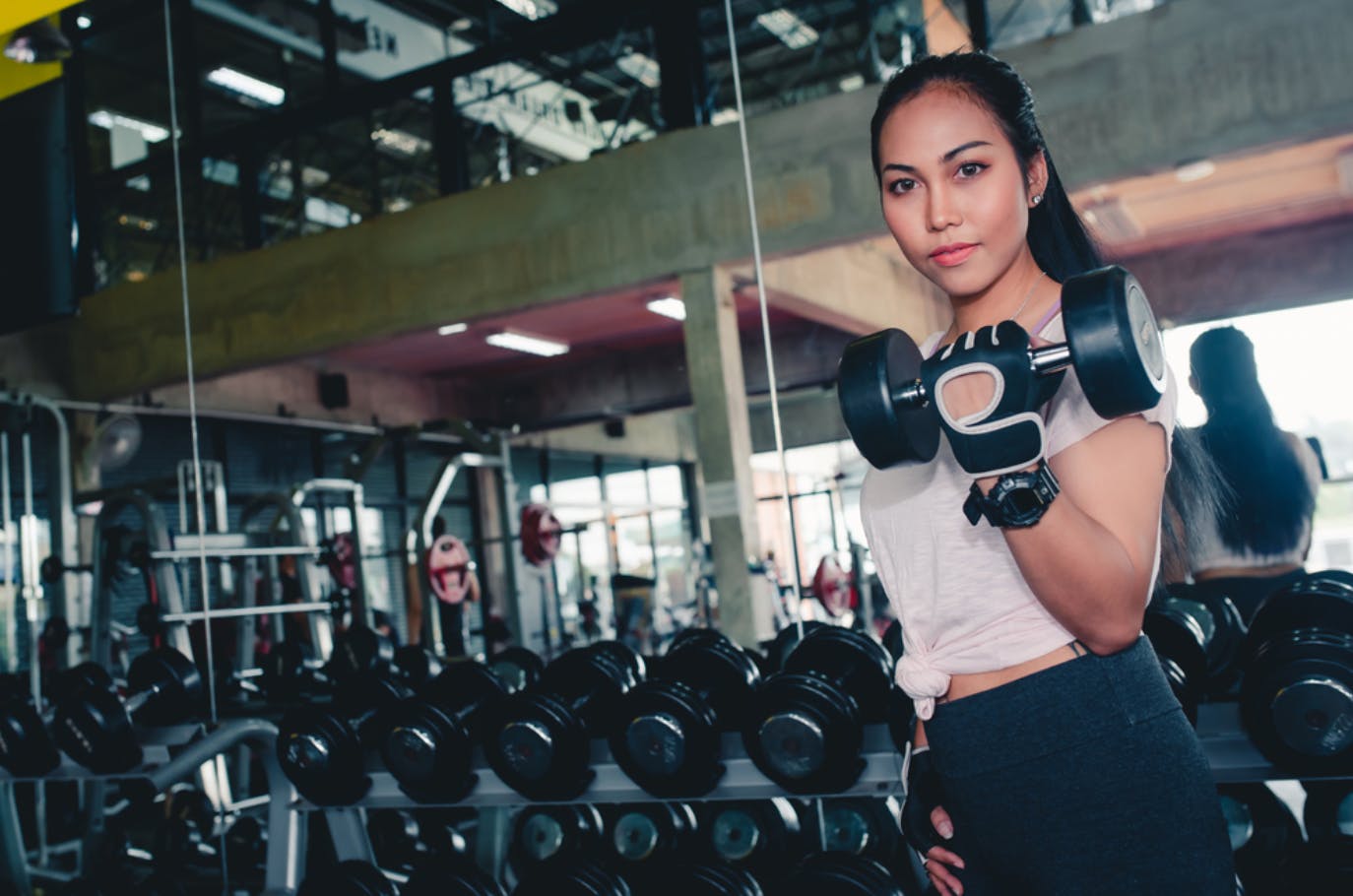
One of the most popular and effective biceps exercises, this move isolates the biceps rather than involving multiple muscle groups like a compound exercise would.
How to do it:
- Stand upright holding a dumbbell in each hand, arms at your sides, palms facing forward.
- Keeping your upper arms and elbows close to your body, bend your elbows to curl the dumbbells up toward your shoulders. Engage your core and avoid swinging your body to lift the weight.
- Pause briefly at the top, then lower the dumbbells back down with control.
Do 3 sets of 10–12 reps.
Exercise 2: Dumbbell Overhead Press
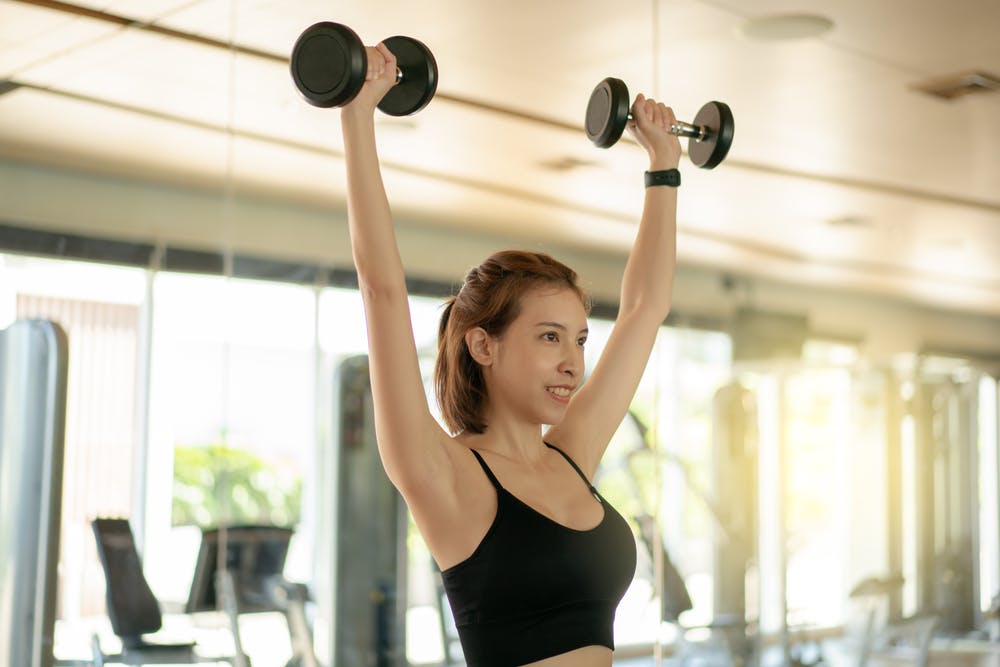
A great choice for building shoulder strength and stability. Performing it seated offers more back support, while the standing version also challenges your core and balance, which has real benefits for overall functional strength and injury prevention.
How to do it:
- Start standing (or seated), holding a dumbbell in each hand at shoulder height, palms facing forward, elbows bent so your forearms are roughly perpendicular to the floor.
- Press the dumbbells straight overhead until your arms are extended, without locking your elbows harshly.
- Lower back to the starting position with control, and repeat.
Do 3 sets of 10–12 reps. Aim to press in as straight a line as possible — it may take some practice to feel fully stable, especially standing.
Exercise 3: Dumbbell Overhead Triceps Extension
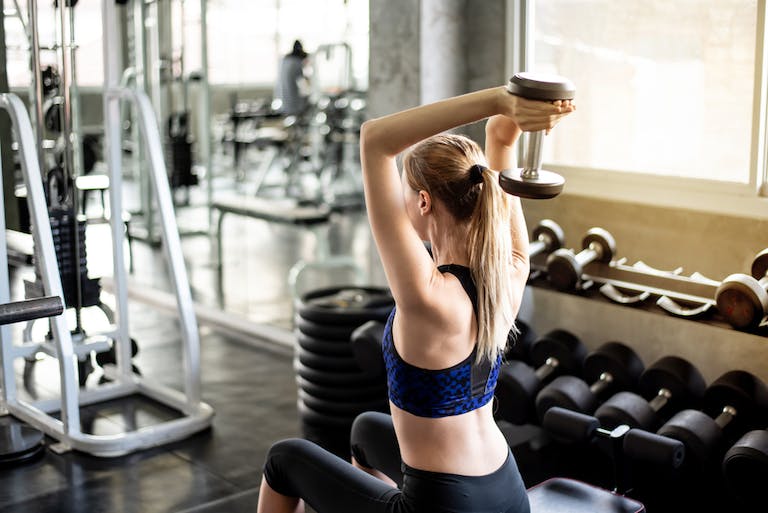
While cable machines are also great for triceps work, the dumbbell version is an effective way to target and strengthen the triceps at home or in the gym. Alternating single-arm reps with a lighter weight can help even out strength between your left and right sides.
How to do it:
- Sit on a bench or exercise ball, or stand with feet shoulder-width apart. Hold one dumbbell with both hands and raise it straight overhead, arms fully extended — this is your starting position.
- Keeping your upper arms close to your ears and stationary, bend your elbows to slowly lower the dumbbell behind your head, inhaling as you lower.
- Pause briefly, then extend your elbows to raise the dumbbell back overhead to the starting position, exhaling as you press up.
Do 3 sets of 10–12 reps. Keep the movement controlled — this exercise relies on your elbows staying stable and your upper arms staying still, with only your forearms moving.
Exercise 4: Dumbbell Front Raise (Shoulders)
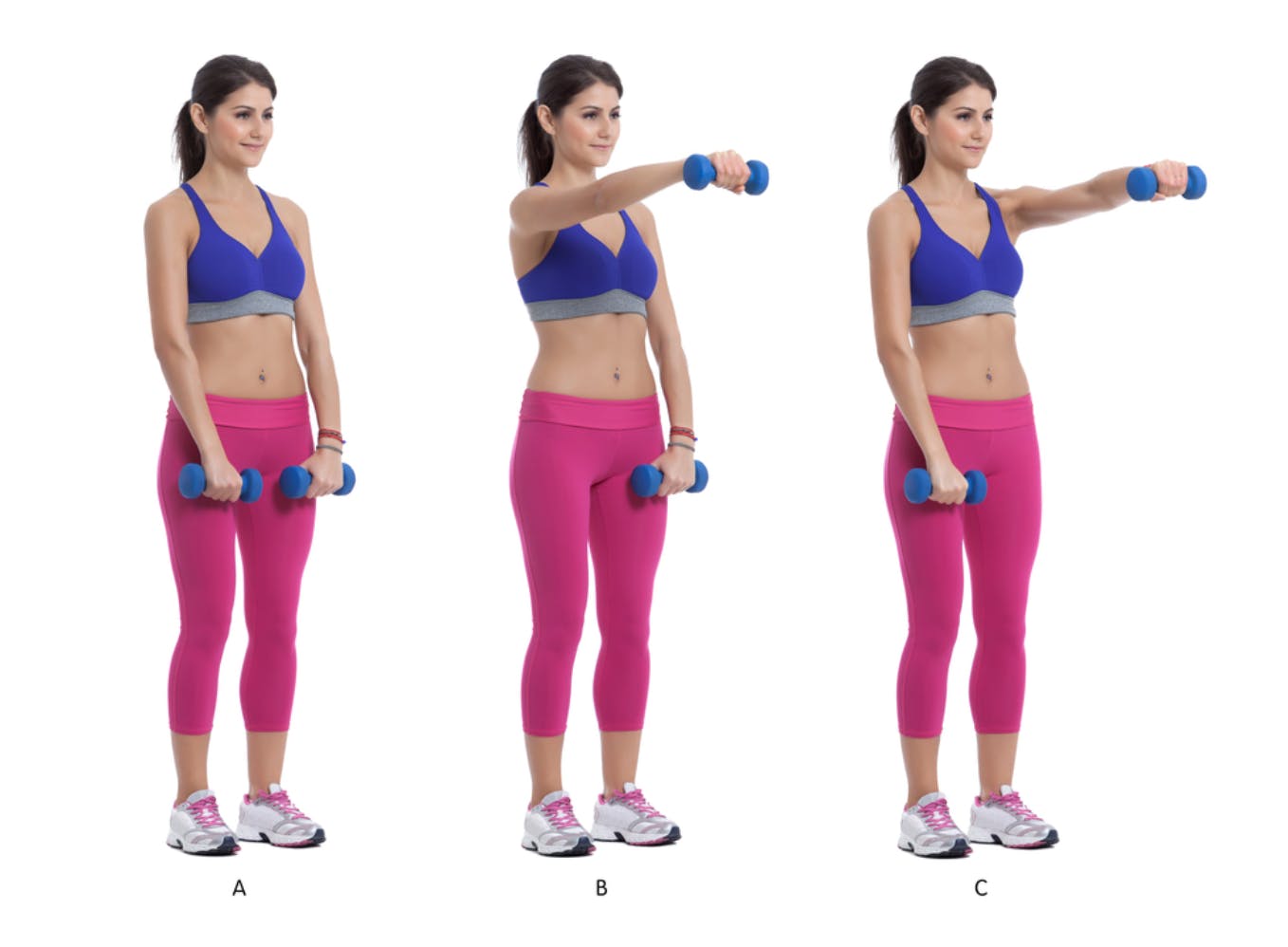
This move targets the shoulders — specifically the anterior (front) deltoid muscle — rather than the biceps, making it a great complement to the exercises above for well-rounded arm and shoulder development. Lifting the weight in front of you with straight arms makes your shoulder muscles work harder to control the motion.
How to do it:
- Stand holding a dumbbell in each hand, arms at your sides, palms facing your body.
- With a slight bend in your elbows, raise both arms straight out in front of you until they’re roughly parallel to the floor.
- Lower back down with control and repeat.
Do 3 sets of 10–12 reps per side. Use a lighter weight for this exercise than you might for curls — the length of your arm as a lever makes this move more demanding on the shoulder than it might look. Raising one arm at a time can also help you focus on balance and control.
Together, these four exercises give you a well-rounded routine for your biceps, shoulders, and triceps. Start with a manageable weight, prioritize form over how much you’re lifting, and increase weight gradually as the current one starts to feel easy. If you’re new to strength training or unsure about your form, a certified personal trainer can check your technique and help you build a program suited to your goals. This article is intended for general education and isn’t a substitute for personalized guidance from a fitness professional. (For more, see our guides on how to warm up before the gym and beginner-friendly gym exercise series.)
Frequently Asked Questions
How many sets and reps should I do for dumbbell arm exercises?
3 sets of 10–12 reps per exercise is a solid starting point for building strength and muscle tone. Adjust the weight so the last couple of reps in each set feel challenging but still doable with good form.
Is the dumbbell front raise a biceps or shoulder exercise?
It's a shoulder exercise, primarily targeting the anterior (front) deltoid muscle, not the biceps. It's a great complement to biceps-focused moves for building well-rounded arm and shoulder strength.
What’s the correct form for a dumbbell overhead triceps extension?
Start with the dumbbell held overhead with arms extended. Keeping your upper arms stationary and close to your ears, bend your elbows to lower the dumbbell behind your head, then extend your arms to press it back overhead.
How much weight should beginners use for these exercises?
Choose a weight that lets you complete all reps with good form, without swinging your body or losing control of the movement. It's better to start lighter and increase gradually than to start too heavy.
Do I need to warm up before doing dumbbell exercises?
Yes. A short warm-up of light cardio and dynamic movement helps prepare your muscles and joints, reducing your risk of injury before lifting weights.
References
- American Council on Exercise (ACE) — proper form for dumbbell strength exercises (acefitness.org).
- Mayo Clinic — strength training: how-to guide for beginners (mayoclinic.org).