

Looking for a workout that challenges both strength and endurance at once? Sled training might be exactly what you’re after. This guide covers what a sled (or “prowler”) actually is, how to structure a full sled workout, and a rundown of some of the most popular sled exercises.
What Is a Sled?
A sled, also known as a prowler, is a metal frame with two vertical handles at the top and two horizontal handles lower down, along with posts where weight plates can be loaded to add resistance. Sled training has grown from a niche tool used mainly in football and sprint conditioning into a broader fitness trend, largely because of how effectively it challenges the lower body.
When pushing or pulling a sled, the glutes initiate the movement, while the hamstrings and quadriceps sustain it and generate momentum. The core plays a key supporting role throughout — protecting the spine, helping transfer force efficiently into the sled, and maintaining overall balance and stability during the movement.

According to Patrick Jones, a strength coach at Performance Lab by the Wright Fit in New York City, few training tools challenge strength and endurance as effectively, at the same time, as a loaded sled — which helps explain why the sled has long been a staple in how endurance athletes like sprinters and soccer players condition their bodies.
Building a Complete Sled Workout
If you’re new to sled training, there’s no need to load up with heavy plates right away. Start with an empty frame and focus on your body position — pay attention to how your back, thighs, and abs engage throughout the movement.
Keeping your spine in a straight, natural, and comfortable position is essential. If you feel any spinal pain during practice, stop immediately and reassess your posture before continuing, since spinal injuries can be serious. Add weight gradually as your fitness level allows; overloading the sled can force your body into compensating movements that put unnecessary strain on the spine.
Sled training was originally developed with athletes like football and soccer players in mind and was typically done in large, open outdoor spaces. As it’s become more popular in everyday gym training, sled workouts have adapted to fit smaller indoor spaces as well.
Getting Set Up
Preparation is straightforward: gather a sled frame, any ropes or straps you’ll need, and an appropriate number of weight plates for your fitness level. Choose a flat, low-friction surface that won’t create excessive noise as the sled moves, and make sure the area is free of obstructions, with enough clearance from other people to avoid collisions.
For a complete workout, choose 4 to 6 sled exercises and perform 3 to 4 sets of each, resting as needed between sets and taking about a minute of rest between exercises. Many people add sled work at the end of a weightlifting session specifically to build endurance. Because sled movements mirror everyday actions like pushing and pulling, most people find them fairly intuitive to pick up.
Popular Sled Exercises
Sled Push — High and Low
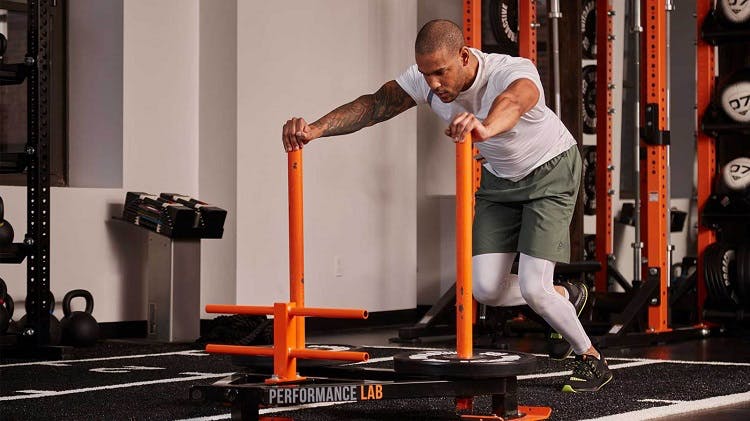
- Grip the vertical bars for a higher push position, or the horizontal bars for a lower one.
- After loading the frame with an appropriate weight, drive forward by thrusting your hips, similar to pushing a heavy crate or cabinet.
- Keep your back straight throughout, engaging your abs for stability as you move. Use short, quick steps, aiming to complete one set in roughly 40 seconds.
Plank Pull
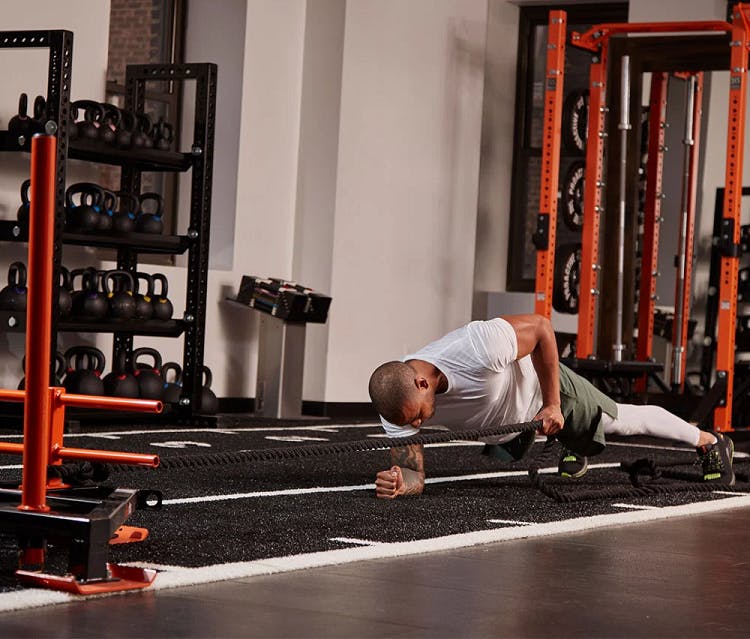
- Secure one end of a rope to the sled frame and let the other end rest on the floor.
- Get into a standard plank position, keeping your body in a straight line from head to toe, and grip the loose end of the rope.
- Pull the rope toward your body until the sled makes contact.
- Repeat with the other hand to complete one set.
Side Pull
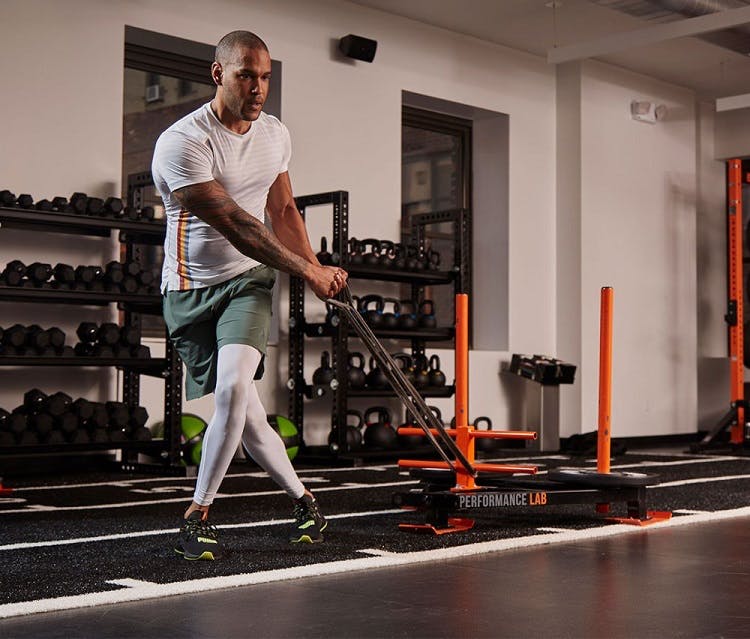
- Grip both ropes attached to the sled while standing to the right of the machine, left elbow bent behind you, right hand near your abdomen, and both fists close to your left hip.
- Cross your left leg over toward the right while extending your right leg out.
- Continue the movement for about 40 seconds.
- Switch sides and repeat.
Pull Row

- Stand facing the sled with the two rope handles attached to the crossbar, positioned far enough back that your arms can fully extend.
- From a squat position, pull the sled toward you. Aim for 12-15 reps per set.
Bear Crawl Pull
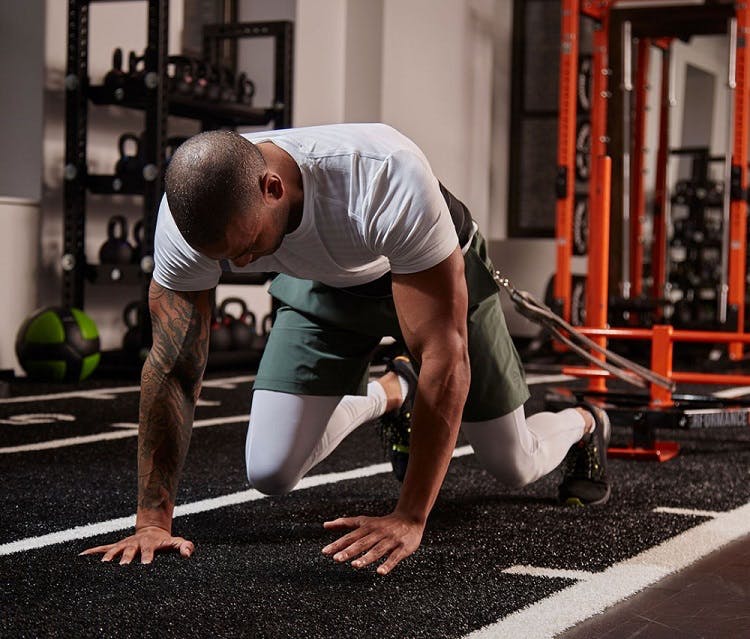
- Secure a belt around your hips and connect it to the sled frame. Get into a crawling position facing the sled, hands and knees on the ground, back straight.
- Lift your knees off the ground and crawl on your toes, moving your left hand with your right leg and vice versa.
- Continue for 30 seconds to complete one set.
For more ways to build a well-rounded routine, see our guide to easy home exercises for belly fat reduction.
The Bottom Line
Sled training is a demanding but relatively low-risk way to build lower-body strength and endurance at the same time, especially when you start light, prioritize form, and add weight gradually. Whether you’re training in a gym or an open outdoor space, the core principles stay the same: keep your spine neutral, let the sled’s resistance match your current fitness level, and stop if you feel spinal pain.
Frequently Asked Questions
What is a sled (prowler) in fitness training?
A sled, also called a prowler, is a metal frame with two vertical handles up top and two horizontal handles lower down, plus posts for loading weight plates. Athletes push or pull it across the floor to build lower-body strength and endurance simultaneously.
Is sled training good for beginners?
Yes, with the right approach. Beginners should start with an empty sled frame, focus on body position and a neutral spine, and add weight gradually. Because the sled is self-limiting — overload it and it simply won’t move — it’s a relatively low-risk way to build strength and conditioning.
How many sled exercises should a full workout include?
A complete sled session typically includes 4 to 6 different exercises, performed for 3 to 4 sets each, with rest between sets and about a minute of rest between exercises. Sled work is often added at the end of a strength training session to build endurance.
What muscles does sled training work?
Sled exercises primarily target the glutes, quadriceps, and hamstrings, since the lower body initiates and sustains the pushing or pulling motion. The core is engaged throughout to protect the spine and transfer force efficiently to the sled.
What should I watch for to avoid injury during sled training?
Keep your spine straight and in a natural, neutral position throughout each movement. If you feel any spinal pain, stop immediately and reassess your form or reduce the weight. Avoid loading the sled with more weight than you can move while maintaining good technique, since excessive weight can force compensations that strain the back.
References
- Men’s Journal — “On the Prowl,” featuring Patrick Jones, strength coach at Performance Lab by the Wright Fit, New York City.
- National Strength and Conditioning Association (NSCA) — sled training as a strength and conditioning tool.
- Wikipedia — Training sled, overview and common sled training variations.