

The second trimester is often the most comfortable stretch of pregnancy for staying active — morning sickness has usually eased, energy levels tend to improve, and your belly isn’t yet large enough to significantly limit movement. Here’s accurate, ACOG-based guidance on exercising safely during this stage.
Is Exercise Safe During the Second Trimester?
For most women with an uncomplicated pregnancy, yes — the American College of Obstetricians and Gynecologists (ACOG) recommends at least 150 minutes of moderate-intensity aerobic activity per week during pregnancy, similar to general guidelines for non-pregnant adults. Regular exercise during pregnancy is associated with benefits including reduced back pain, better sleep, improved mood, and a lower risk of excessive weight gain and gestational diabetes.
That said, exercise isn’t appropriate for everyone during pregnancy. Talk to your doctor before starting or continuing an exercise routine if you have any of the following:
- Certain heart or lung conditions
- A history of preterm labor in this pregnancy, or an incompetent (weakened) cervix
- Persistent vaginal bleeding
- Placenta previa after 26 weeks
- Ruptured membranes
- Preeclampsia or pregnancy-induced high blood pressure
- A multiple pregnancy with additional risk factors
If none of these apply to you, exercise is generally encouraged and safe to continue or start during the second trimester, ideally with your doctor’s general awareness of your routine.
Key Safety Guidelines for the Second Trimester
Avoid Lying Flat on Your Back for Extended Periods
This is one of the most important safety points specific to this stage of pregnancy. By the second trimester, the growing uterus can compress a major vein (the inferior vena cava) when you lie flat on your back, reducing blood flow back to your heart and potentially causing dizziness or reduced blood flow to the baby. Avoid exercises performed lying flat on your back for more than a few minutes; many prenatal fitness classes modify these movements to a side-lying or propped-up position instead.
Use the “Talk Test” Instead of Strict Heart Rate Targets
Older guidance often recommended staying under a specific heart rate ceiling during pregnancy, but current ACOG guidance has moved away from fixed heart rate targets, since target heart rate zones vary significantly by individual fitness level and age. Instead, a simple practical gauge is the “talk test”: you should be able to hold a conversation while exercising. If you’re too breathless to talk, that’s a sign to ease off the intensity.
Avoid Overheating
Stay well hydrated, wear breathable clothing, and avoid exercising in extreme heat or humidity, or in activities like hot yoga. Overheating during pregnancy, especially prolonged or intense overheating, is a reasonable thing to avoid, particularly as your body already generates more heat during pregnancy.
Skip High Fall-Risk and Contact Activities
Activities with a significant risk of falling (downhill skiing, horseback riding, gymnastics) or direct abdominal contact (contact sports, activities with a risk of collision) aren’t recommended during pregnancy, given the potential risk to you and the baby from a fall or blow to the abdomen. Scuba diving is also not recommended at any point in pregnancy, due to decompression risks to the fetus.
Modify as Your Balance Changes
As your belly grows, your center of gravity shifts, which can affect balance and coordination. Activities requiring quick direction changes or precise balance may need modification, and it’s worth being extra mindful of stability, especially later in the second trimester.
Good Exercise Options for the Second Trimester
- Walking: Accessible, low-impact, and easy to adjust in intensity as your pregnancy progresses.
- Swimming and water aerobics: Water’s buoyancy supports your growing belly and reduces joint stress, making this one of the most comfortable options as pregnancy progresses.
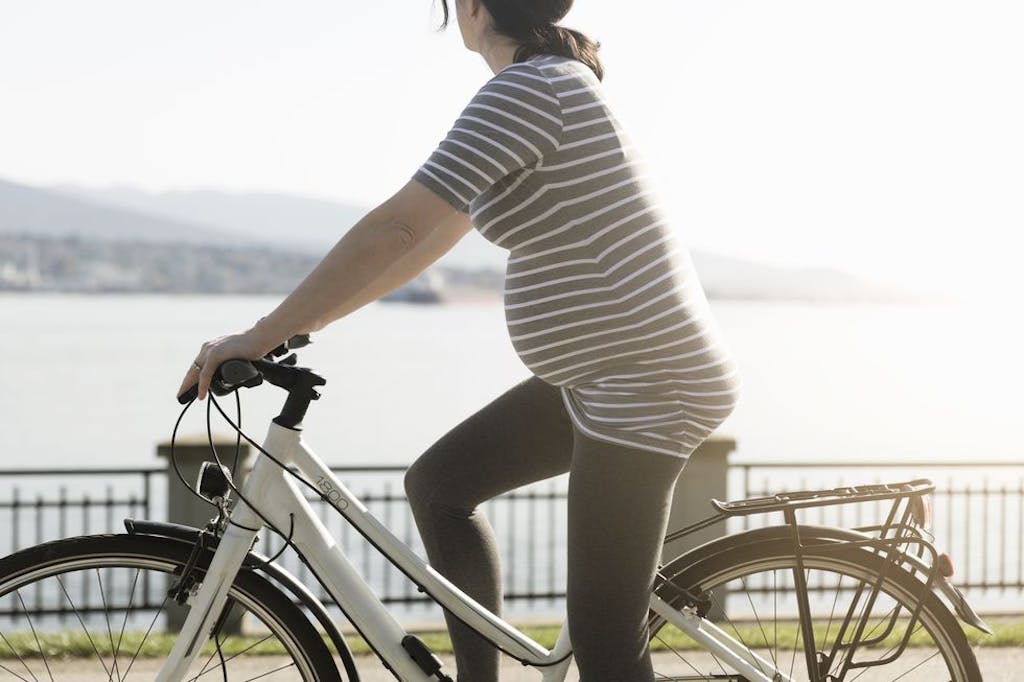
- Stationary cycling: A stable, low-impact cardio option that avoids the fall risk of outdoor cycling as your balance shifts.
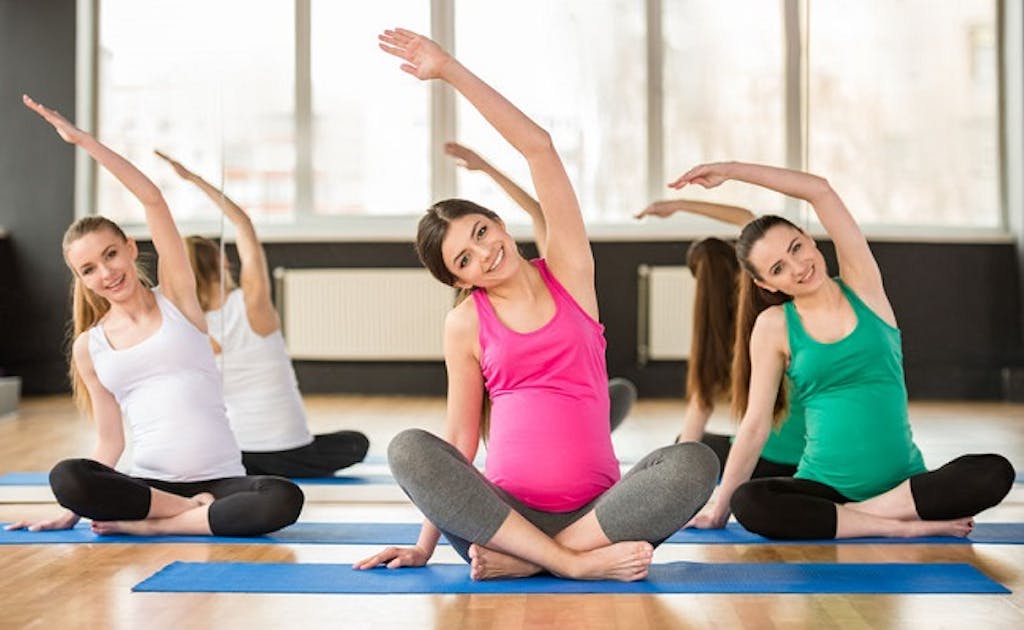
- Prenatal yoga or Pilates: Classes specifically designed for pregnancy modify poses appropriately (avoiding prolonged time on your back or deep abdominal twisting) and can support flexibility, strength, and relaxation.
- Light strength training: Bodyweight or light-resistance strength exercises can help maintain muscle tone; avoid heavy lifting, holding your breath during exertion (which can affect blood pressure), and exercises lying flat on your back.
Warning Signs to Stop Exercising Immediately
Stop exercising and contact your doctor promptly if you experience:
- Vaginal bleeding
- Dizziness or feeling faint
- Chest pain
- Headache
- Muscle weakness affecting your balance
- Calf pain or swelling (which can indicate a blood clot)
- Regular, painful contractions
- Fluid leaking from the vagina
- Decreased fetal movement
- Shortness of breath before you’ve started exerting yourself
These symptoms warrant medical attention rather than continuing to exercise through them.
The second trimester is often a great window to stay active during pregnancy, with real benefits for your physical and mental wellbeing. Keep the key safety points in mind — avoiding prolonged time on your back, using the talk test rather than chasing a specific heart rate, and watching for warning signs — and check with your doctor about what’s appropriate for your specific pregnancy. This article is intended for general education and isn’t a substitute for personalized medical advice. (For more on staying active and healthy through pregnancy, see our guides on prenatal yoga in the final month and what to expect in the 7th month of pregnancy.)
Frequently Asked Questions
How much exercise is recommended during the second trimester?
ACOG recommends at least 150 minutes of moderate-intensity aerobic activity per week for most pregnant women without contraindications, similar to general guidelines for non-pregnant adults.
Why should I avoid lying on my back while exercising in the second trimester?
By this stage, the growing uterus can compress a major vein when you lie flat on your back, reducing blood flow to your heart and potentially causing dizziness or reduced blood flow to the baby. Avoid back-lying exercises for more than a few minutes; many prenatal classes offer modified positions instead.
How do I know if I’m exercising too hard during pregnancy?
Current guidance favors the "talk test" over strict heart rate targets — you should be able to hold a conversation while exercising. If you're too breathless to talk, ease off the intensity.
What exercises should be avoided during the second trimester?
Activities with high fall risk (skiing, horseback riding), contact sports, scuba diving, hot yoga or exercise in extreme heat, and exercises requiring prolonged time lying flat on your back are generally not recommended during pregnancy.
What symptoms mean I should stop exercising and call my doctor?
Vaginal bleeding, dizziness, chest pain, headache, calf pain or swelling, regular contractions, fluid leaking from the vagina, decreased fetal movement, or shortness of breath before exertion all warrant stopping exercise and contacting your doctor.
References
- American College of Obstetricians and Gynecologists (ACOG) — physical activity and exercise during pregnancy (acog.org).
- Centers for Disease Control and Prevention (CDC) — physical activity guidelines for pregnant women (cdc.gov).
- Mayo Clinic — pregnancy and exercise: baby, let’s move! (mayoclinic.org).