
Dark spots are one of the most common reasons people visit a dermatologist, and one of the most frustrating to treat. They fade slowly, return easily, and attract a crowded market of creams, peels, and pills that promise more than they deliver.
The good news is that hyperpigmentation is well understood. Once you know which type you are dealing with and what drives it, it becomes much clearer which treatments are worth your time and money, and which carry real risks.
Key Takeaways
- Hyperpigmentation happens when melanocytes produce excess melanin in one area, usually in response to UV light, inflammation, or hormones.
- The three most common types are sun spots, post-inflammatory hyperpigmentation, and melasma, and each responds differently to treatment.
- Daily sunscreen is the foundation of every treatment plan. Without it, most other efforts are undone.
- Topical ingredients such as retinoids, niacinamide, azelaic acid, and vitamin C have the strongest evidence for at-home care.
- Oral supplements can play a supporting role, but they cannot erase dark spots or change your natural skin tone.
- Avoid unregulated skin-lightening creams, which may contain mercury or hydroquinone.
Why Dark Spots Form
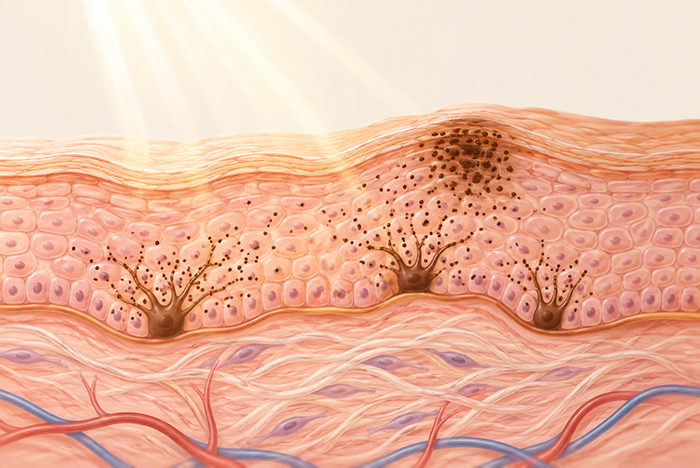
Melanin is your skin’s built-in sun shield. Melanocytes in the lower epidermis produce it through a chain of reactions that starts with the enzyme tyrosinase, then package it into melanosomes and pass those to surrounding skin cells. That system is supposed to darken skin evenly. Hyperpigmentation happens when a localized trigger pushes some melanocytes into overdrive.
The main triggers are:
- Ultraviolet and visible light. Cumulative sun exposure is the leading cause of age spots and sun spots.
- Inflammation. Acne, eczema, bug bites, burns, and aggressive skin treatments can all leave pigment behind.
- Hormones. Estrogen and progesterone appear to sensitize melanocytes, which is why melasma is linked to pregnancy and hormonal birth control.
- Certain medications. Some antibiotics, antimalarials, and chemotherapy drugs can cause pigment changes.
The Three Common Types
Sun Spots (Solar Lentigines)
These flat, well-defined brown spots appear on the face, hands, shoulders, and chest after years of sun exposure. They are usually harmless, but any spot that changes in size, shape, or color, or looks different from your other spots, should be checked by a dermatologist to rule out skin cancer.
Post-Inflammatory Hyperpigmentation (PIH)
PIH is the dark mark left after a pimple, rash, or injury heals. It is especially common and persistent in medium and deeper skin tones, where melanocytes respond more strongly to inflammation.[1] Epidermal PIH often fades over several months with good sun protection, while deeper dermal PIH can last much longer.
Melasma
Melasma appears as symmetrical patches on the cheeks, forehead, upper lip, or jawline. It is driven by a mix of hormones, UV and visible light, genetics, and changes in blood vessels in the skin. It is chronic and tends to relapse, so treatment focuses on long-term control rather than a one-time cure.[2]
Treatments Dermatologists Rely On
Sun Protection: Non-Negotiable
Use a broad-spectrum SPF 30 or higher every day, including cloudy days, and reapply every two hours when outdoors. For melasma, tinted sunscreens containing iron oxides add protection against visible light, which standard mineral and chemical filters do not block well. Wide-brimmed hats and shade still matter.
Topical Ingredients
| Ingredient | How it works | Notes |
|---|---|---|
| Retinoids (retinol, adapalene, tretinoin) | Speed cell turnover so pigmented cells shed faster | Retinol and adapalene 0.1% are OTC; tretinoin is prescription. Can irritate at first; avoid during pregnancy |
| Niacinamide (2% to 5%) | Reduces transfer of pigment to skin cells[3] | Gentle; suits most skin types |
| Azelaic acid | Inhibits tyrosinase, calms inflammation | About 10% in OTC products; 15% to 20% by prescription. Helpful for PIH and acne-prone skin |
| Vitamin C (L-ascorbic acid) | Antioxidant, mild tyrosinase inhibition | Best used in the morning under sunscreen |
| Hydroquinone | Strong tyrosinase inhibitor | Prescription only in the US; use under medical supervision |
In-Office Procedures
Chemical peels, microneedling, and certain lasers can speed results for stubborn pigment. They need to be chosen carefully, especially for deeper skin tones and melasma, because aggressive treatments can trigger new inflammation and more pigment. A board-certified dermatologist can match the procedure to your skin type.
Where Oral Supplements Fit
Oral options are appealing because they work on all of your skin at once, but the evidence varies widely by ingredient.
Tranexamic acid is the best-supported oral option for melasma. In a randomized, placebo-controlled trial, 250 mg twice daily for three months significantly improved moderate to severe melasma compared with a placebo.[4] In the US, it is a prescription drug approved for heavy menstrual bleeding and used off-label for melasma. Because it affects blood clotting, it should only be taken under a doctor’s care.
Glutathione is the most popular ingredient in over-the-counter brightening supplements. A randomized trial found that 500 mg a day for four weeks modestly lowered the melanin index, with significant changes at some but not all measured sites.[5] A later 12-week trial at 250 mg a day showed similar trends, with a lower melanin index and fewer UV spots than placebo, though not every result reached statistical significance.[6] Reviews describe oral glutathione as reasonably safe at standard doses but warn that injectable and IV forms lack safety data and are not recommended.[7]
Polypodium leucotomos, a fern extract, has been studied as an add-on to sunscreen. It appears to reduce UV-induced damage and may support melasma treatment, but it does not replace topical sun protection.[8]
Because this category is so heavily marketed, it helps to separate realistic expectations from hype. This piece that unpacks common myths about pills that lighten skin covers why oral products cannot permanently change your natural tone and why timelines are measured in months, not days.
If you decide to add one, look for a formula that pairs antioxidants such as glutathione and vitamin C with clear dosing and third-party testing. Browsing a dedicated skin-brightening supplement lineup can make it easier to compare ingredients side by side. Treat any supplement as one layer in a plan that still centers on sunscreen and proven topicals.
What to Avoid
The US Food and Drug Administration has repeatedly warned about skin-lightening products sold online and in some stores. Since the CARES Act took effect in September 2020, over-the-counter skin-lightening products containing hydroquinone cannot be legally marketed without FDA approval, and the agency has issued warning letters to companies that kept selling them.[9] In its most recent consumer warning, updated in June 2026, the FDA advised people not to use OTC skin-lightening products at all, noting that none are FDA-approved or legally marketed. Its lab testing has found high levels of mercury in some of these products, and it has received reports of rashes, facial swelling, and skin discoloration linked to hydroquinone.[10]
That warning covers topical drug products. Dietary supplements are regulated separately and cannot legally claim to treat or cure a skin condition, which is one more reason to be skeptical of any pill marketed as a “whitening” treatment.
Red flags include:
- Products that promise “whitening” or permanent lightening.
- Creams with no ingredient list, or with “mercurous chloride,” “calomel,” or “mercury” on the label.
- Unprescribed glutathione injections or IV drips.
- Harsh DIY remedies such as undiluted lemon juice or baking soda, which can irritate skin and trigger more pigment.
A Realistic Timeline
- Weeks 1 to 4: Skin feels smoother and looks fresher as the routine settles in. Pigment changes are usually minimal.
- Weeks 6 to 12: Superficial spots and PIH begin to fade noticeably with consistent sunscreen and topicals.
- Months 3 to 6 and beyond: Deeper pigment and melasma improve gradually. Maintenance is needed to prevent relapse.
When to See a Dermatologist
- A spot is new, growing, changing color, or has irregular borders.
- Pigmentation is spreading quickly or appeared after you started a new medication.
- Melasma has not improved after three months of consistent at-home care.
- You have a deeper skin tone and are considering peels or lasers.
This article is for educational purposes only and is not a substitute for advice from a dermatologist or other health care professional.
REFERENCES
Frequently Asked Questions
There is no instant fix. The most reliable approach combines daily broad-spectrum sunscreen with a proven topical such as a retinoid, niacinamide, or azelaic acid. For stubborn spots, a dermatologist may add prescription treatments or in-office procedures.
Some ingredients, particularly glutathione, show modest effects on melanin in clinical trials lasting 4 to 12 weeks. They may support a broader routine but do not replace sunscreen or topical treatments, and they cannot permanently change your natural skin tone.
Melanocytes in affected areas remain sensitive. Sun exposure, heat, hormonal shifts, and new inflammation can all reactivate them, which is why sun protection and maintenance treatment are needed long after spots fade.
Post-inflammatory hyperpigmentation in the upper layers of skin often fades over several months if the skin is protected from the sun. Sun spots and melasma usually need active treatment and ongoing maintenance.
It has good evidence for melasma, but in the US it is a prescription drug used off-label for this purpose, and it affects blood clotting. It is not appropriate for people with a history of blood clots or certain other risk factors, so it should only be taken under a doctor's supervision.