
Boxing is one of the world’s oldest and most enduring combat sports. Here’s an accurate look at its history, basic technique, the equipment you’ll need, and its real fitness benefits — along with a few safety considerations worth knowing before you start training.
What Is Boxing?
Boxing is a combat sport built around punching, traditionally also called “pugilism” (from the Latin for “fist”). Matches take place in a roped-off “ring” over a set number of timed rounds, with a winner determined by knockout, technical stoppage, or a judges’ decision based on scoring. A referee oversees the match inside the ring, while ringside judges score the bout and determine the winner if it goes the distance.
The History of Boxing
Ancient Origins
Depictions of fist-fighting appear in Sumerian relief carvings dating back roughly 5,000 years, making boxing one of humanity’s oldest recorded sports. It became a formal competitive event at the ancient Greek Olympics in 688 BC, and remained popular through the Roman era.
In ancient Rome, boxers’ hand wraps evolved from simple leather straps into the “cestus” — a leather binding sometimes reinforced with metal or embedded stones — which made bouts significantly more brutal and, in some cases, fatal for the fighters involved.

Revival in England
After the fall of the Roman Empire, organized boxing largely disappeared for centuries. It re-emerged in England in the late 17th and early 18th centuries as bare-knuckle prizefighting, gaining popularity partly through wealthy patrons who wagered on matches — which helped drive the push toward formal rules and structure.
Weight classes were discussed as early as the 1820s but weren’t formally standardized until the early 20th century, helping ensure fairer matchups between fighters of similar size. In 1867, the Marquess of Queensberry Rules introduced standardized round lengths, ring dimensions, and mandatory gloves — a foundational moment for modern boxing as we know it today.
Boxing in America
Boxing arrived in the United States in the 1830s as British fighters sought new competition abroad. Theodore Roosevelt, an amateur boxer himself in his youth, was a notable supporter of the sport later in the 19th century.
By the early 20th century, prizefighting had become hugely popular in America, though its association with gambling and corruption led to bans in many jurisdictions — prompting the rise of private clubs where fans paid to watch matches legally. As radio and later television broadcasts brought fights into people’s homes, the club scene declined, but the sport’s popularity kept growing.
Boxing reached a cultural peak in the mid-1960s with Muhammad Ali, and the 1976 film Rocky cemented its place in pop culture. The 1980s brought icons like Sugar Ray Leonard, Mike Tyson, and Julio César Chávez, and by the 1990s, boxing’s popularity rivaled that of mainstream sports like basketball, football, and hockey.
Basic Boxing Technique
Stance
Boxers use a variety of stances, but the traditional “orthodox” stance remains most common. In this stance, you stand with your left foot forward and right foot back, torso upright, left hand extended slightly forward and right hand held back near your chin for defense. Left-handed fighters often use the mirrored “southpaw” stance, with the right foot and right fist leading instead.

The Four Basic Punches
Boxing is built around four foundational punches:
- Jab: A quick, straight punch thrown with the lead hand.
- Cross: A straight, powerful punch thrown with the rear hand.
- Hook: A semi-circular, horizontal punch that can be thrown with either hand, typically targeting the opponent’s head or body from the side.
- Uppercut: An upward punch, usually aimed at the chin or body, thrown from a lower position.
Equipment Needed for Boxing
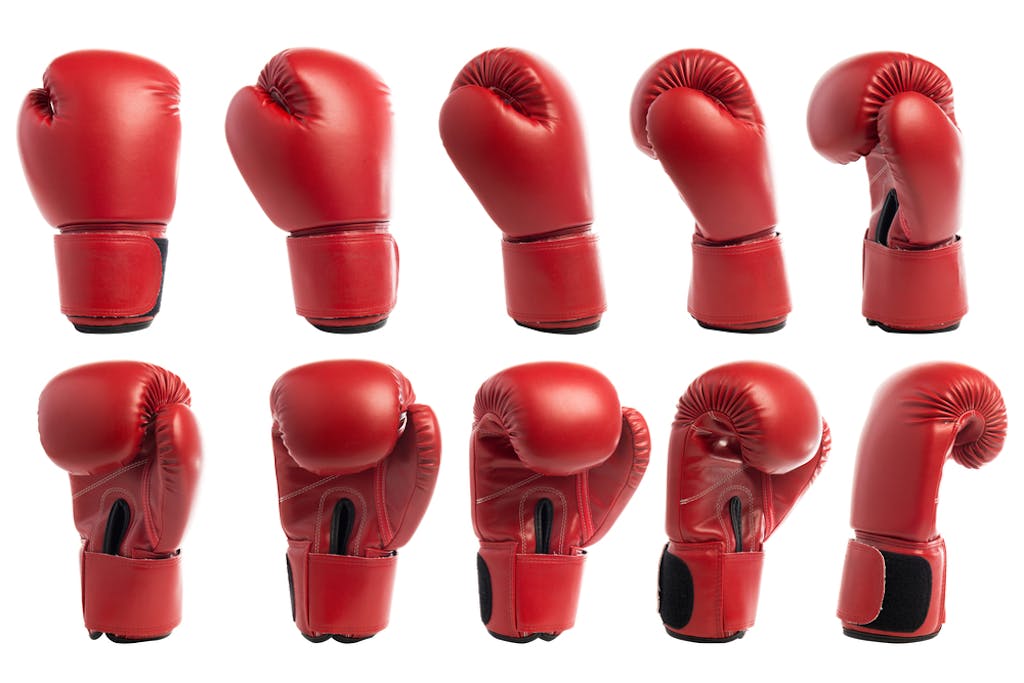
- Boxing Gloves: Glove weight varies by purpose — 16 oz gloves are a solid all-around choice for training and bag work, while smaller sizes may suit those with smaller hands or those focused primarily on speed and technique drills.
- Hand Wraps: Wrapped cloth and elastic support around your hands and wrists protects your knuckles and joints during training and sparring. Learning correct wrapping technique matters for injury prevention.
- Boxing Shoes: Lightweight, high-top shoes with rubberized soles support quick footwork, good grip, and ankle stability. Not essential for casual fitness boxing, but many gyms require them for serious training or sparring.
- Protective Gear: A mouthguard is essential for any sparring or competition, protecting your teeth and reducing (though not eliminating) impact-related risk. Competitive boxers also use a groin protector and headgear for additional protection.
Benefits of Boxing
Cardiovascular and Physical Fitness
A vigorous 40-minute boxing session can burn roughly 400–700 calories depending on intensity and body weight, and the combination of footwork, punching, and constant movement builds a genuinely well-rounded level of fitness — supporting muscle tone, coordination, and overall strength.
Improved Endurance and Conditioning
Boxing training alternates between intense bursts and active recovery, which builds cardiovascular endurance and stamina over time — benefits that carry over well beyond the gym into everyday physical resilience.
Better Reflexes and Mental Sharpness
Reading an opponent’s movement and reacting quickly is central to boxing, which helps sharpen reflexes, coordination, and focus — skills that tend to translate into other physical activities as well.
Stress Relief
Like most vigorous exercise, boxing supports stress relief through the release of endorphins and the mental focus it demands, which can offer a genuine break from daily stressors. It’s worth noting that the idea of “venting” frustration through aggressive hitting as a way to fully purge anger isn’t as well supported by psychology research as popular belief suggests — some studies indicate that acting out aggression doesn’t reliably reduce it and can sometimes reinforce it. The stress-relieving benefit of boxing is better understood as coming from exercise itself — the endorphins, the focus, the physical exertion — rather than the specific act of hitting something out of anger.
Heart Health
Regular, sustained boxing training supports cardiovascular fitness and is associated with the general heart-health benefits of aerobic exercise, including support for healthy blood pressure and reduced cardiovascular risk over time, as part of an overall healthy lifestyle.
Confidence and Body Composition
Consistent training often brings visible improvements in strength, coordination, and overall fitness, which many people find genuinely boosts their confidence — a well-documented general benefit of regular exercise, not unique to boxing specifically.
A Note on Safety
Boxing is a genuinely great workout, but it’s worth being clear-eyed about its risks, especially if sparring or competition is part of your training. Repeated blows to the head, even with protective gear, carry a real risk of concussion and, with extensive exposure over years, long-term brain health concerns — a well-documented issue in combat sports research. If you’re training purely for fitness, focusing on bag work, pad work, and technique drills rather than sparring meaningfully reduces this risk while still delivering excellent cardiovascular and strength benefits. If you do plan to spar or compete, train under a qualified coach, progress gradually, always use proper protective equipment, and talk to your doctor first if you have any underlying health conditions.
Boxing offers a genuinely rich history and a workout that builds strength, endurance, and mental sharpness — whether you’re training purely for fitness or considering the sport more seriously. Starting with proper instruction on stance, punches, and safety fundamentals will serve you well regardless of your goals. This article is intended for general education and isn’t a substitute for guidance from a certified boxing coach. (Curious about other combat disciplines? See our guides on Wing Chun and Kick Fit, a fitness-focused discipline built on kickboxing technique.)
Frequently Asked Questions
What are the four basic punches in boxing?
The jab (a quick lead-hand punch), the cross (a powerful rear-hand punch), the hook (a semi-circular punch from either hand), and the uppercut (an upward punch aimed at the chin or body).
How many calories does boxing burn?
A vigorous 40-minute session can burn roughly 400–700 calories, depending on intensity and body weight, making it an effective full-body workout.
Is boxing safe for beginners?
Bag work, pad work, and technique training are generally low-risk and a great way to start. Sparring and competition carry a real risk of injury, including concussion, so beginners should train under a qualified coach and progress gradually before considering contact work.
What equipment do I need to start boxing?
Boxing gloves (16 oz is a good general-purpose weight) and hand wraps are the essentials. A mouthguard is necessary for any sparring, and boxing shoes, while not required for casual training, can improve footwork and comfort.
Does boxing really help relieve stress?
Yes, largely through the same mechanisms as other vigorous exercise — endorphin release and mental focus. The idea that aggressively hitting something "purges" anger specifically isn't as well supported by psychological research as commonly believed; the stress relief comes more from the exercise itself than the act of hitting.
References
- USA Boxing — official rules and technique fundamentals (usaboxing.org).
- American Academy of Neurology — concussion and brain health risks in combat sports (aan.com).
- American Council on Exercise (ACE) — boxing as a fitness workout: benefits and considerations (acefitness.org).
- Bushman BJ. “Does venting anger feed or extinguish the flame? Catharsis, rumination, distraction, anger, and aggressive responding.” Personality and Social Psychology Bulletin.