

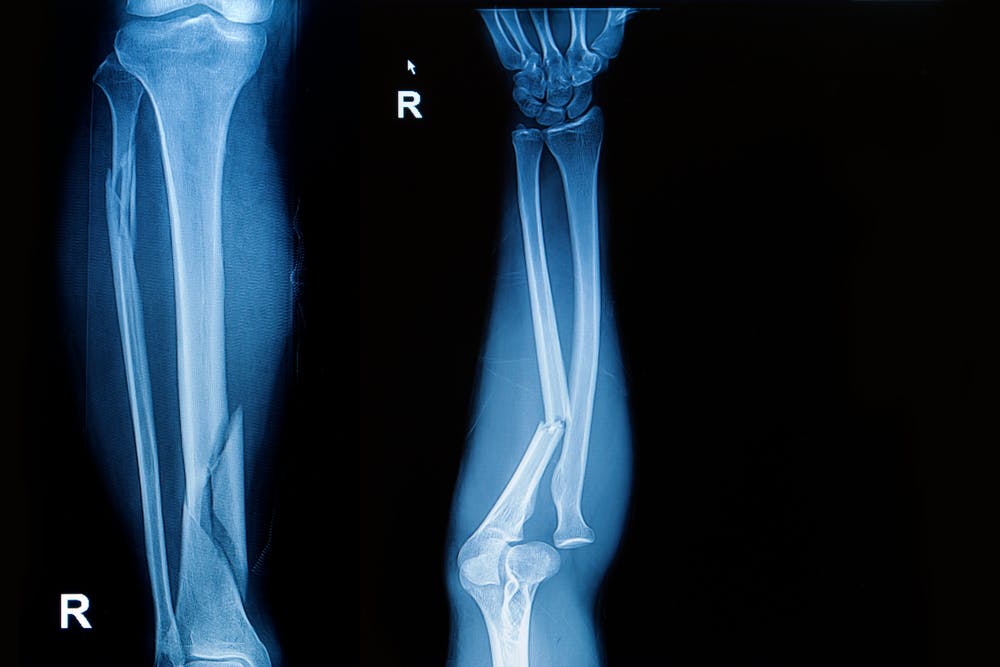
A broken leg changes daily life significantly, and how well it heals depends on more than just time — proper medical treatment, nutrition, and how you manage the recovery period all play a real role. Here’s an accurate guide to treatment and nutritional support for a smoother recovery.
How Broken Legs Are Treated
Treatment depends on the type, location, and severity of the fracture, and should always be determined by a doctor based on imaging and examination — this isn’t something to self-manage.
Immobilization
Many leg fractures are treated with a cast, splint, or brace to keep the bone properly aligned while it heals. This is standard for fractures that are stable or can be realigned without surgery.
Surgery
More severe or unstable fractures may require surgery, which can involve plates, screws, rods, or pins to hold the bone in the correct position while it heals. Your doctor will determine whether surgery is needed based on the specific fracture pattern and stability.
Physical Therapy
Once the bone has sufficiently healed, physical therapy helps restore strength, flexibility, and range of motion, and supports a safe return to normal activity. Starting this at the right time, guided by your doctor, matters for a full recovery.

Typical Healing Timeline
Bone healing generally happens in overlapping stages: initial inflammation and blood clot formation in the first few days, soft callus formation over the following weeks, hardening into bone (hard callus) over the next several weeks to months, and gradual bone remodeling that can continue for many months after that. Most simple leg fractures take roughly 6 to 12 weeks for the bone itself to heal enough for weight-bearing, though full recovery, including strength and mobility, often takes longer — and this varies significantly based on the specific bone, fracture severity, age, and overall health. Your doctor will confirm healing progress with follow-up exams or imaging rather than relying on a generic timeline alone.
Nutrition to Support Healing
Diet doesn’t replace proper medical treatment, but it does support the biological processes involved in bone healing.
Calcium
Calcium is essential for bone structure. The Recommended Dietary Allowance (RDA) for most adults is 1,000 mg/day, increasing to 1,200 mg/day for women over 50 and adults over 70 — this total includes calcium from both food and supplements combined, not supplements alone. Good food sources include dairy products, fortified plant milks, leafy greens, and almonds. Most people recovering from a fracture don’t need more than this standard amount unless a doctor specifically recommends otherwise; more isn’t automatically better; excess calcium intake carries its own risks, like kidney stones.
Vitamin D
Vitamin D helps your body absorb calcium effectively, making it just as important for bone healing. The RDA for most adults is 600–800 IU per day. It’s worth being clear about safe upper limits here: the NIH’s Tolerable Upper Intake Level for vitamin D is 4,000 IU per day for adults, and consistently exceeding this — especially over an extended period like several months — raises real risk of vitamin D toxicity, which can cause nausea, weakness, and in serious cases, kidney problems from excess calcium in the blood. If your doctor has diagnosed a vitamin D deficiency, they may prescribe a higher, supervised therapeutic dose for a defined period — but this should be a specific medical recommendation based on your bloodwork, not a general self-directed high-dose regimen. Good dietary sources include fatty fish, egg yolks, and fortified foods, alongside safe, moderate sun exposure.
Protein
Protein supports the formation of new tissue, including the collagen matrix that bone mineral is built on. Adequate protein intake — from sources like lean meat, fish, eggs, dairy, beans, and legumes — supports the healing process, especially in the weeks following a fracture.
Vitamin C
Vitamin C plays a role in collagen synthesis, which matters for both bone and soft tissue healing. Citrus fruits, bell peppers, strawberries, and broccoli are good sources.
Other Supportive Nutrients
Magnesium, zinc, and vitamin K also play supporting roles in bone metabolism and healing, and are generally well covered by a varied diet including vegetables, nuts, seeds, and whole grains, without needing separate high-dose supplementation unless a doctor identifies a specific deficiency.

Other Ways to Support Recovery
- Follow your doctor’s weight-bearing instructions exactly: Putting weight on a healing fracture too soon, or in the wrong way, can disrupt healing or cause the bone to shift out of alignment.
- Don’t smoke: Smoking is well documented to slow bone healing and increase the risk of complications like delayed union or nonunion (a fracture that doesn’t heal properly).
- Moderate alcohol intake: Heavy alcohol use can interfere with bone healing and increase fall risk during a period when balance is already compromised.
- Get adequate rest: Sleep supports the body’s overall healing and repair processes.
- Attend follow-up appointments: Regular check-ins let your doctor confirm the fracture is healing properly and catch any complications early.
Warning Signs to Report to Your Doctor
Contact your doctor promptly if you notice:
- Increasing pain, rather than gradual improvement, as healing progresses
- Swelling, redness, or warmth that worsens rather than improves
- Numbness, tingling, or loss of sensation in the leg or foot
- Fever, which could indicate infection, especially after surgery
- A cast or brace that feels too tight, causes numbness, or has a foul odor
These can be signs of complications like infection, poor circulation, or improper healing that need prompt medical attention.
Healing a broken leg well depends on following your doctor’s specific treatment plan, supporting your body with adequate (not excessive) key nutrients, and giving the process the time it genuinely needs. Rushing back to full activity, or over-supplementing in an attempt to speed things up, tends to work against recovery rather than helping it. This article is intended for general education and isn’t a substitute for personalized medical advice from your treating doctor. (For more on nutrition and bone health during recovery, see our guide on optimal calcium supplementation for fracture recovery.)
Frequently Asked Questions
How long does it take for a broken leg to heal?
Most simple leg fractures take roughly 6 to 12 weeks for the bone to heal enough for weight-bearing, though this varies by the specific bone, severity, age, and overall health. Full recovery, including strength and mobility, often takes longer.
How much vitamin D should I take to help a fracture heal?
The standard RDA is 600–800 IU per day for most adults. Don't exceed the 4,000 IU daily Tolerable Upper Intake Level without a doctor's specific guidance — higher therapeutic doses are sometimes prescribed for a diagnosed deficiency but should be supervised by a doctor, not self-directed.
Does taking extra calcium speed up bone healing?
Not necessarily. Most people recovering from a fracture don't need more than the standard RDA (1,000–1,200 mg/day depending on age and sex) unless a doctor identifies a specific deficiency. Taking more than needed doesn't speed healing and carries its own risks, like kidney stones.
Can smoking really slow down bone healing?
Yes, this is well documented. Smoking is associated with slower bone healing and a higher risk of complications like delayed union or nonunion, where the fracture doesn't heal properly.
What are signs my broken leg isn’t healing properly?
Increasing pain instead of gradual improvement, worsening swelling or redness, numbness or tingling, fever, or a cast that feels too tight or has a foul odor are all reasons to contact your doctor promptly.
References
- National Institutes of Health, Office of Dietary Supplements — Vitamin D and Calcium fact sheets, including Tolerable Upper Intake Levels (ods.od.nih.gov).
- American Academy of Orthopaedic Surgeons, OrthoInfo — fracture healing and recovery (orthoinfo.aaos.org).
- Mayo Clinic — broken leg: diagnosis and treatment (mayoclinic.org).