

Environmental education for preschoolers addresses a pressing global concern by starting early. Building environmental awareness in early childhood plays a meaningful role in shaping how children understand the world around them and supports their broader development.
Why Environmental Education Matters for Preschoolers
Environmental education for preschool children covers a range of activities designed to build appreciation for the environment through small, everyday actions that promote cleanliness and care for the natural world.
Building a Green, Clean Learning Environment
Bringing environmental education into a preschool program benefits children immediately and over the long term, while also working toward a cleaner, greener school. As teachers plan and design these lessons, they often deepen their own understanding of environmental issues and practical ways to reduce waste and pollution.
Environmental education woven into the preschool routine helps children build positive habits, including:
- Keeping toys and learning materials tidy after use
- Throwing trash away in the right place
- Practicing basic recycling and waste sorting
- Caring for plants and pets
- Simple eco-friendly habits, like not picking flowers or stepping on grass, and gently reminding friends not to litter
- Understanding basic hygiene and personal health habits
- Taking part in environmental activities both at school and at home
Environmental Education Methods for Preschoolers
Understanding a few effective approaches can help parents and teachers plan activities that fit young children’s developmental stage.
Connecting Children With Nature
One of the most effective approaches is simply helping children build a genuine connection with the natural world. Encouraging a love of nature supports character development, sparks creativity, and lays the groundwork for a lasting sense of environmental responsibility.

With early, consistent exposure, children naturally build habits that support the environment over time. A few ways to bring children closer to nature:
- Take a walk outside: Simply experiencing changing scenery can be refreshing for kids and helps spark their creativity and curiosity.
- Nurture their natural curiosity: Children often light up watching a garden grow, playing with a family pet, or spotting a butterfly. These small moments build real affection for the natural world.
- Go camping: For kids growing up in cities, a camping trip can be a memorable way to experience blooming flowers, green trees, and the outdoors more fully.
Visiting Farms and Green Spaces
Farm visits let children observe nature directly and build appreciation for it firsthand. Schools can build these into field trips, sometimes combined with a nature walk or a light litter cleanup along the way.
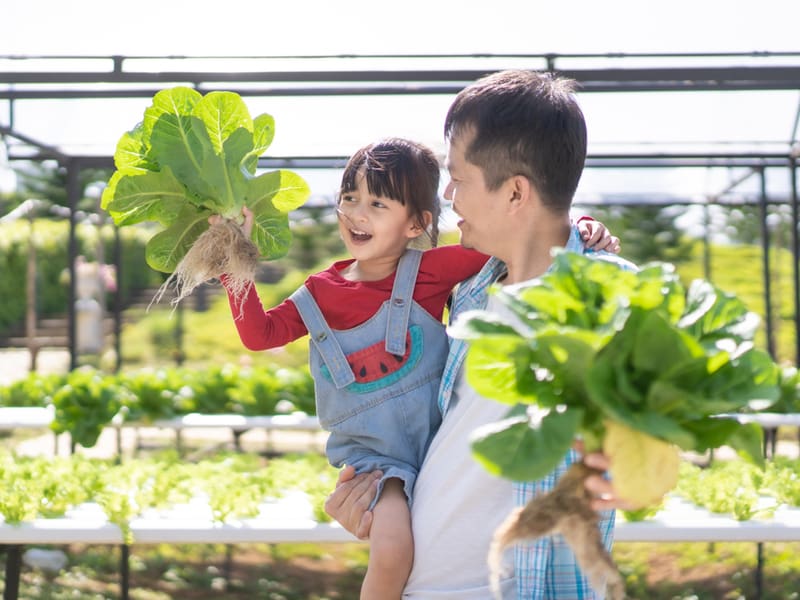
During these outings, teachers can show children simple crafts using natural materials — weaving leaves into shapes, arranging fallen petals into patterns, or gathering wildflowers to make a small gift for a parent. These small, hands-on moments help children build a deeper appreciation for nature and form habits that tend to stick with them.
Trash Cleanup Activities
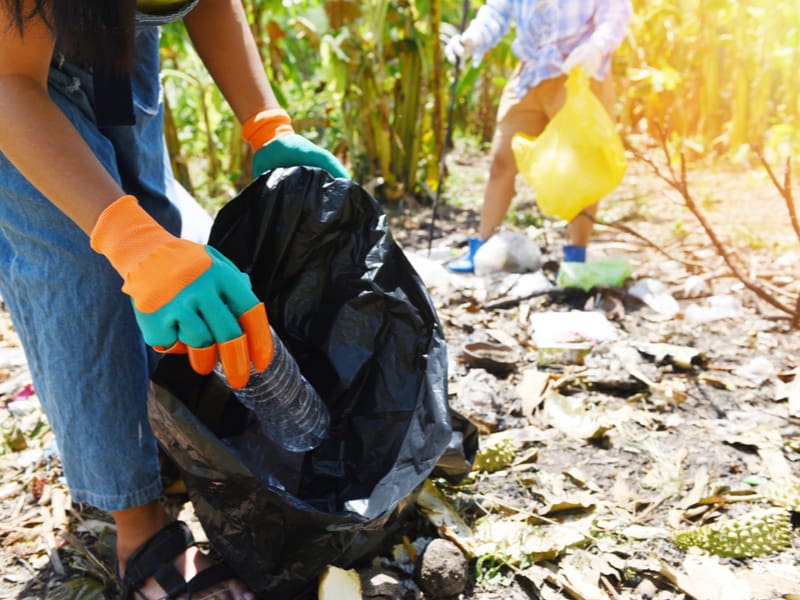
Hands-on trash cleanup is one of the more memorable, real-world ways to teach environmental responsibility. Many schools organize these on weekends, splitting children into small groups to pick up litter around the school grounds and nearby areas.
Beyond teaching the kids directly, a visible cleanup effort often catches the attention of neighbors and the wider community, spreading environmental awareness a bit further than the classroom.
To keep it fun and engaging, teachers can turn cleanup into a friendly challenge — which group collects the most litter, or finishes their section fastest — to keep young kids motivated and involved.
During cleanup, it helps for teachers to talk with children about how litter affects the environment and local wildlife, in simple, age-appropriate terms. Kids often bring this knowledge home and share it with parents and grandparents, extending the lesson beyond the classroom.
Classroom Waste Sorting
Waste sorting teaches preschoolers the difference between recyclable and non-recyclable materials, and works best when it combines a little explanation with plenty of hands-on practice.
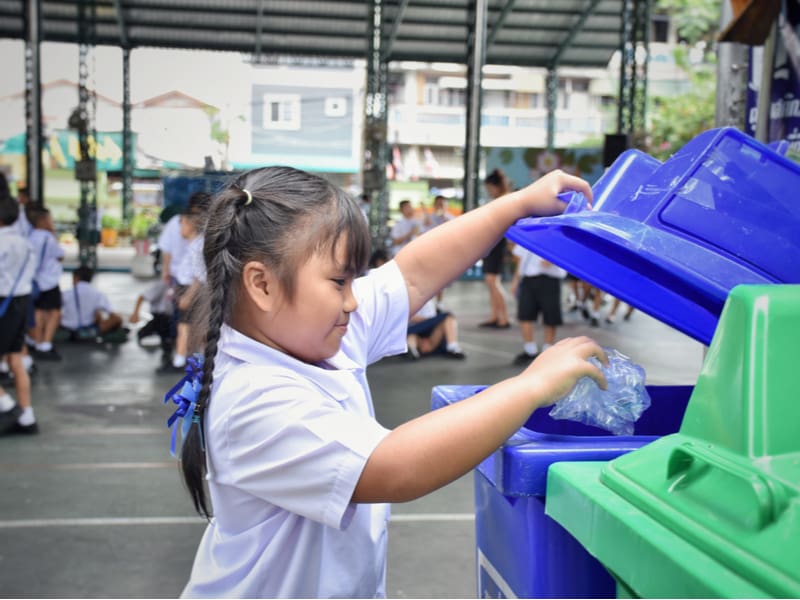
A simple three-bin system that many U.S. schools use as a model:
- Compost (food scraps): Leftover fruit, vegetables, and other food waste can go into a compost bin, where it naturally breaks down into nutrient-rich soil over time.
- Recycling: Clean paper, cardboard, plastic bottles, and metal cans go into the recycling bin to be processed into new materials.
- Trash (landfill): Items that can’t be composted or recycled — like candy wrappers and most plastic film or bags — go into the regular trash bin, since these materials don’t break down or recycle easily.
Practicing this at school helps the habit carry over at home too, and gives kids an early, concrete sense of how their everyday choices connect to the environment. It can also be a fun jumping-off point for simple recycled crafts.
Talking With Your Child About the Environment
Preschoolers are naturally curious, and their play and exploration often come with a constant stream of “why” questions — why are leaves green, why is the sky blue, why do flowers smell nice.
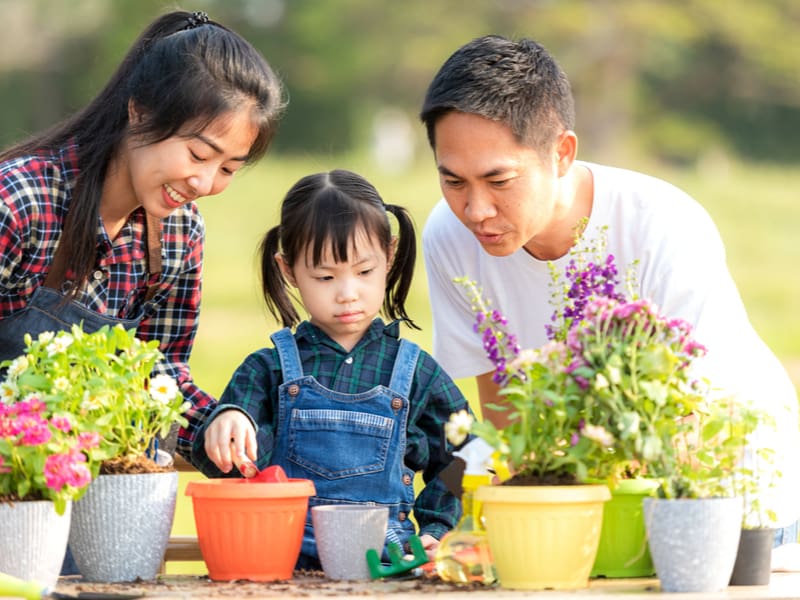
Rather than just answering, parents can turn the moment into a two-way conversation by asking questions back. This kind of back-and-forth supports cognitive development and often pushes parents to look things up together with their child — modeling curiosity as much as answering it.
At school, teachers can guide similar conversations, encouraging children to think through why the environment matters and to share their own thoughts and feelings about nature — not just receive information passively.
A simple, effective approach: if the goal is teaching kids to care for a pet or a garden, walk through the actual tasks involved and let them help — watering plants, tidying up the garden area, or feeding a pet — so the lesson is hands-on rather than abstract.
Hopefully this gives parents and teachers a clearer sense of how to approach environmental education for preschoolers. From there, it’s about choosing the methods that fit your child’s age, personality, and interests, to help build a genuine, lasting habit of caring for the environment.
Frequently Asked Questions
What age should environmental education start?
Preschool age (roughly 3 to 5 years old) is a great time to start, since children at this stage are naturally curious and forming the everyday habits that tend to stick into later childhood.
What are simple environmental habits preschoolers can learn?
Putting away toys, throwing trash in the right bin, basic recycling and composting, caring for plants and pets, and not littering are all age-appropriate habits preschoolers can realistically learn and practice.
How can parents teach recycling to young children?
A simple three-bin system — compost, recycling, and trash — with clear, consistent examples (food scraps vs. paper and plastic bottles vs. wrappers) helps preschoolers grasp the basic idea through repetition and hands-on practice.
Why is connecting kids with nature important for environmental education?
Direct experiences with nature — walks, gardens, pets, camping trips — build a genuine emotional connection to the outdoors, which tends to translate into more lasting environmental habits than lessons alone.
How can teachers make environmental lessons engaging for preschoolers?
Hands-on activities like trash cleanup challenges, nature crafts, farm visits, and open-ended conversations (asking "why" questions back to the child) tend to work better for this age group than lectures or worksheets.
References
- National Association for the Education of Young Children (NAEYC) — environmental education and outdoor learning for young children (naeyc.org).
- U.S. Environmental Protection Agency (EPA) — recycling and composting basics for schools and families (epa.gov).
- North American Association for Environmental Education (NAAEE) — early childhood environmental education guidelines (naaee.org).